
A Letter from Raphael Lemkin
On Genocide

The following is an imagined letter from Raphael Lemkin, the Polish-Jewish jurist who coined the word genocide and gave his life to its codification in international law. He died in 1959, alone and penniless, at a bus stop in New York. The word was his life’s work. What follows is what he might say if he could see what has become of it.
This was originally posted on Boundless Insights

To whom it may concern,
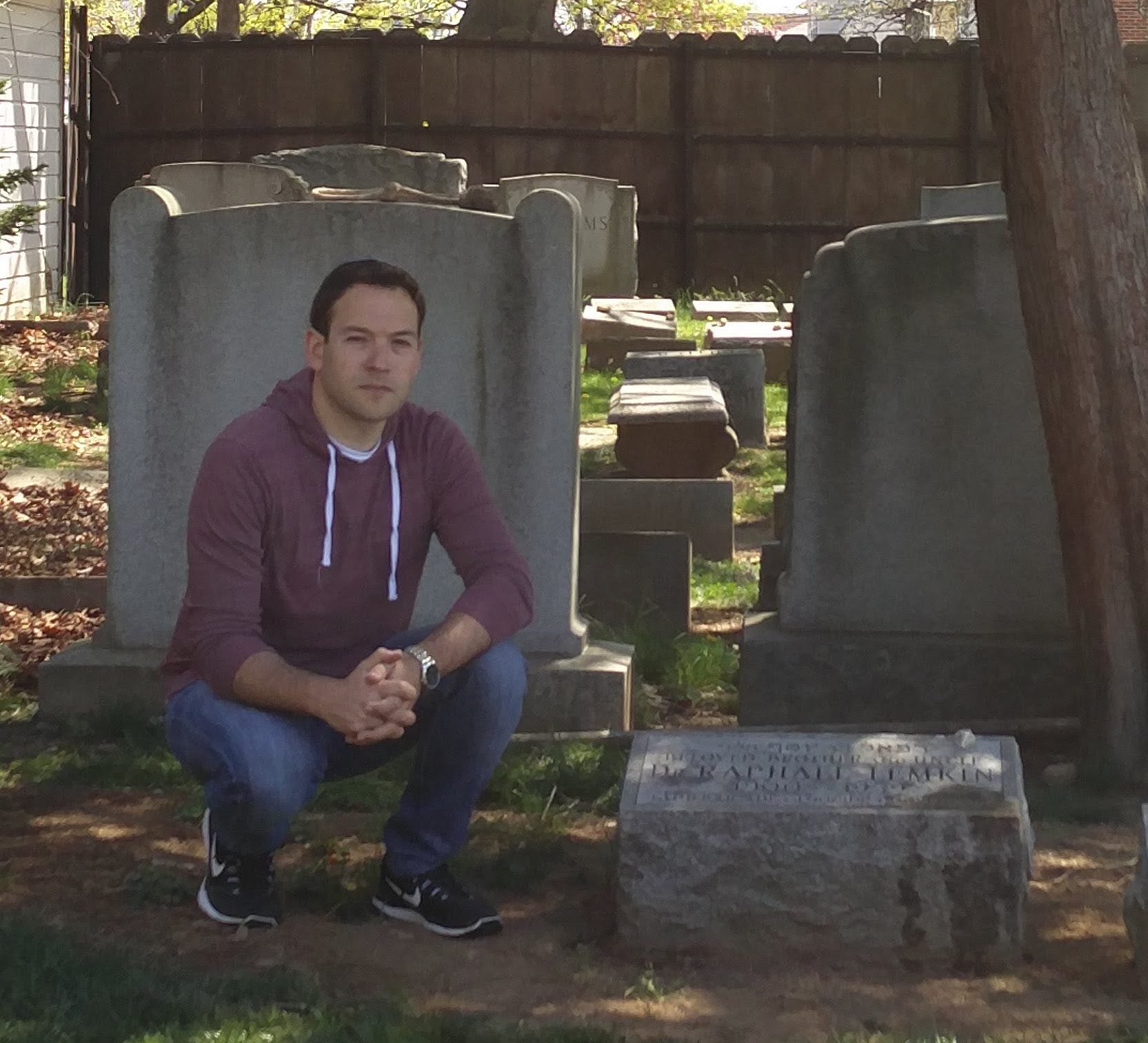
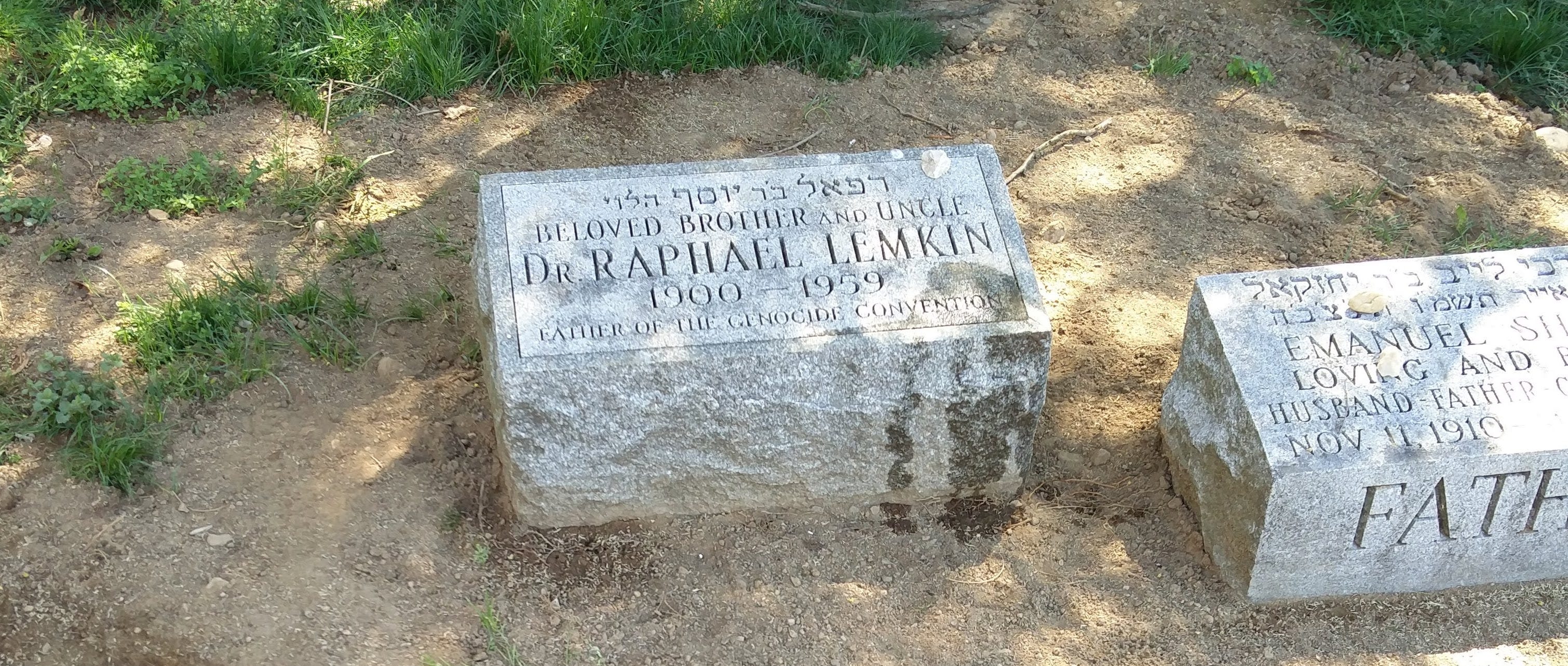
You will not have heard of me. Few do, even now. I was not a victim of genocide. The Nazis did not kill me - though they killed forty-nine members of my family. What killed me was the fight that came after: the years of lobbying and pleading and starving in furnished rooms to give the crime a name and to make the world ratify it. I collapsed at a bus stop on Forty-Second Street in August of 1959, at fifty-nine years old, with no money, no family, and a briefcase full of papers no one wanted. Seven people attended my funeral. The doctors said heart failure. I would have said something else.
I write to you about a word. My word.
I coined it in 1944, while the people I loved were being murdered in a country I fled. My mother. My father. Cousins, aunts, uncles, the whole family tree, taken to Treblinka and turned to smoke. I had begged my parents to leave, to come with me. They wouldn’t. They were wrong, and I couldn’t save them. I’ve carried that knowledge, that guilt, every day since.
The word I coined was not an academic exercise. It was an attempt to give a name to what was done to my family and to the families of every people whose existence has been targeted because of what they were.
The word is genocide.
Genocide
From the Greek genos, a tribe or a people, and the Latin cide, to kill. I joined the two because what was being done required a word that did not yet exist. It wasn’t war, it wasn’t massacre, and it wasn’t persecution, however severe. It was the attempt to erase a people as a people - to end their language, their faith, their continuity, their existence. To make it as if they had never been.
The word was meant to be precise; that was the point. The world already had words for cruelty, for slaughter, for atrocity, for war. What it did not have, before 1944, was a word for the particular crime of trying to destroy a people for the sole reason that they were that people. As such, the Convention I helped to draft would later say. Targeted because of who they are, not because of what they do, not because of where they live, not because of which side they fight on in some war. Because of who they are. That, and only that, is what my word was made to mean.
Today
I have been told what is happening in 2026. My word has been taken up to describe the actions of the Jewish State - the state established by the survivors of the very crime my word was made to name. It’s chanted in university quadrangles, written into scholarship, repeated from political podiums, and hurled at Jewish children walking to school as if it were a stone. I made the word. I know what it was made for. And I can tell you with the authority of its author that what is being described in Gaza is not what my word names.
The word requires intent. Not consequence, however terrible. Not destruction, however vast. Intent. The destruction of the group must be the goal, not the byproduct of a war fought against an army that has embedded itself in the group. The reasoning now offered in defense of the modern accusation runs like this: many civilians have died, therefore the destruction of a people must be the aim. This is just not how my word works. The test isn’t whether civilians died on a terrible scale. The test is whether their death was the purpose of the campaign, or the tragic and culpable consequence of a campaign whose purpose was something else. The two are not the same thing, and a word that can’t tell them apart is a word that can’t do its job.
A nation that warns civilians before it strikes, that opens corridors for their escape, that sends its own children into ground combat to spare the children of the enemy from the air, that negotiates for the return of hostages and the pause of fighting - that nation may be doing many things, some of them terrible. Recklessness is not genocide. Miscalculation is not genocide. Operational failure is not genocide. Even a humanitarian catastrophe, full of real suffering that no one of conscience can look away from, is not genocide. To say so is not to dismiss the suffering. It’s to insist that the suffering be named correctly, because it is only when things are named correctly that they can be addressed.
The war didn’t begin as a random campaign against a population. It began with an enemy that crossed a border on a Saturday morning and entered homes to murder and kidnap whole families. Apparently this is still happening against my people after I first saw it take place over 80 years ago. A country fighting to prevent the repetition of that kind of attack should be judged by the laws of war, by prudence, by morality, and by the consequences of its choices. But that’s not the same thing as intending the destruction of a people as a people. The accusation collapses the difference between targeting a people because they are Palestinian, and fighting an armed group that has chosen to operate from within Palestinian society - beneath its hospitals, inside its schools, behind its civilians. To call this genocide is not to use my word. It is to break it.
In fact, it’s something worse than that. You must understand what it is to take the word forged from the ashes of my family and turn it against the survivors of those same ashes. Yes, my word emerged from Jewish catastrophe, but it was never meant to belong to Jews alone. I made it for the Armenians, for the Roma, for the Hereros, for every people whose existence might be targeted as my own had been. The misuse isn’t offensive because Jews own the word. It’s offensive because precision is what allows the word to protect anyone at all! Every time it is spent on what it was not made to describe, it has less to give the next people who need it.
Why?
The question that must be asked then is why the accusation persists. I think I know. It is not only believed. It is wanted. If Jews are committing genocide, the world can finally stop dwelling on what was done to them. Eight decades of guilt can be put down. Israel - the state that for the first time in two thousand years gave Jews the means to defend themselves - can be condemned without shame. The old suspicions about Jews, the ones polite society has held back for eighty years, can return to ordinary speech, vindicated at last. Opposing Jews stops being bigotry and becomes a duty. By the same logic, the killings of October 7th become resistance, and the families dragged from their beds that morning become the cause of the war their murderers started. It is a clean story. It is also a lie. But what makes it dangerous is not the lie. It is the moral comfort it offers.
This is the inversion of memory. It is the conversion of suffering into guilt. It is a form of forgetting that pretends to be a form of remembering.
Someone once wrote that genocide is a politics that promises a utopia beyond politics: one people, one land, one truth, the end of difference. I meant it as a warning against the tyrants of my century. I didn’t imagine that my word, my own word, would one day be enlisted in the service of the very temptation I described.
So I ask you, whoever you are, reading this letter I can’t truly send: be careful with the word. It was paid for. Forty-nine members of my family paid for it, and millions of others in Poland and Germany and Rwanda and Cambodia and Sudan. Use it when it applies. Don’t use it when it doesn’t. The integrity of the word is the difference between recognizing the next genocide when it comes and missing it because the word had already been spent.
That is all I have to say. The bus is coming.
Yours,
Raphael Lemkin
Wołkowysk, Poland 1900 - New York, USA 1959
For an extended treatment of the history, meaning, and contemporary misuse of the term genocide, read Boundless’s new report, The Charge of Genocide: History, Meaning, and Consequences (April 2026).
I love this essay. Elegant and eloquent, it is the perfect rebuttal to all of those who describe what has happened in Gaza as a genocide.
I cried as I read this…so meaningful and important to say!!!! Thank You!!