
Memo re: Next President
A critical decision for Israel's future

I. Purpose
This memorandum is submitted in advance of the next election for President of the State of Israel, which the Knesset will convene to hold upon the conclusion of President Isaac Herzog’s term in 2028. Its purpose is narrow and its recommendation is single: when the time comes to fill the office, the Knesset should elect Rachel Goldberg-Polin.
The argument that follows is not sentimental. It rests on what the office of President actually is under Israeli law, on what its most consequential holders have made of it, and on a candidate whose record already matches the highest use to which the office has ever been put. Read together, these three things point in one direction. There is, on the merits, arguably no other choice.
II. The Office and What It Is For
Basic Law: The President of the State, enacted in 1964, is a remarkably spare instrument. It opens by declaring that “A President shall stand at the head of the State,” and it never says what that means. The President signs laws, accredits ambassadors, receives foreign envoys, tasks a Member of Knesset with forming a government, and holds the power to pardon. Almost every one of these acts is performed on the advice of others and countersigned by a minister. The office was built, deliberately, to carry very little hard power.
What it was built to carry instead is meaning. The founders understood this from the beginning. In 1952, after Chaim Weizmann’s death, David Ben-Gurion offered the presidency to Albert Einstein. The offer was not an offer of administration. It was an offer to let the most recognizable Jewish mind on earth embody the new state’s intellectual and moral aspirations to the world. Einstein declined, explaining that he lacked the aptitude to deal with people and to exercise official functions. The episode is instructive precisely because of who was asked. The presidency was conceived as a representative office, to be filled by a figure who could speak for the Jewish people rather than govern it.
Shimon Peres put it best on the day he took the office in 2007. The President, he said, is not a governor, not a judge, not a legislator, but he is allowed to dream, to lay down values, and to act with integrity and compassion. That is the whole of the job description that matters. The rest is protocol.
III. The Precedent
The history of the presidency is the history of individuals deciding what to do with an office that the law left almost empty. The most successful of them did the same thing. They turned it outward, and made it a platform for advocacy and moral representation.
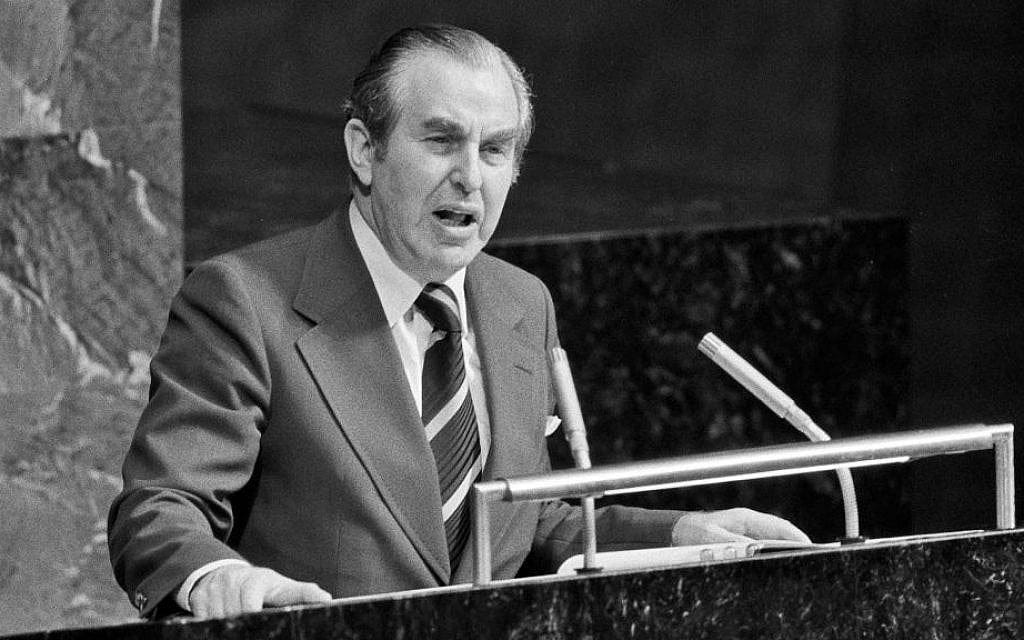
Chaim Herzog is the clearest case. Before he was President he was the ambassador who tore up the United Nations resolution equating Zionism with racism. As President from 1983 to 1993 he visited some thirty countries and addressed roughly fifteen national parliaments, including both houses of the United States Congress and of the Canadian Parliament. He understood himself, and was understood, as the conscience and the voice of Israel abroad. He did not expand the legal powers of the office by a single line. He expanded its reach by force of who he was.
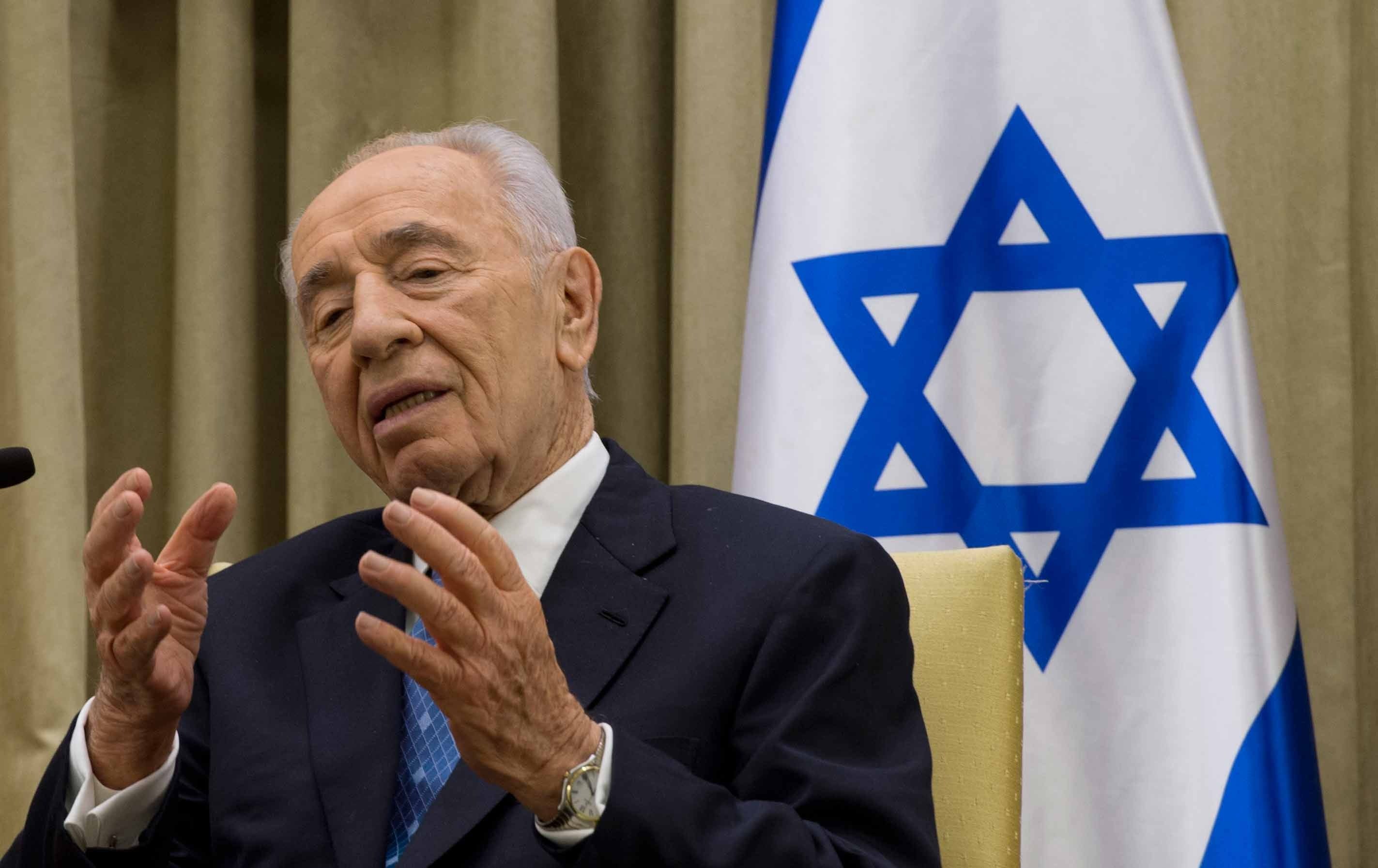
Shimon Peres did the same on a larger stage. A former prime minister and a Nobel laureate, he made the presidency a worldwide platform for Israeli innovation and for the case for peace, addressing the United Nations, the European Parliament, and legislatures across the world. The office did not make Peres a statesman. Peres made the office a statesman’s pulpit.
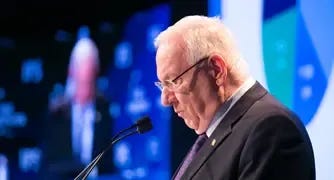
Reuven Rivlin turned the same instrument inward. His 2015 “Four Tribes” address, which named secular, national-religious, ultra-Orthodox, and Arab Israelis as four growingly equal communities that would have to learn a new partnership, became the defining statement of the presidency as the one institution capable of speaking to a fractured society from above its fractures. He later embraced the Diaspora as a fifth tribe.
The pattern is consistent. When the presidency has mattered, it has mattered because its holder used its symbolic authority to advocate, to unify, and to represent. The office rewards moral standing and nothing else, because moral standing is the only currency it issues.
IV. The Candidate
Rachel Goldberg-Polin has already done the work of the office before holding it.
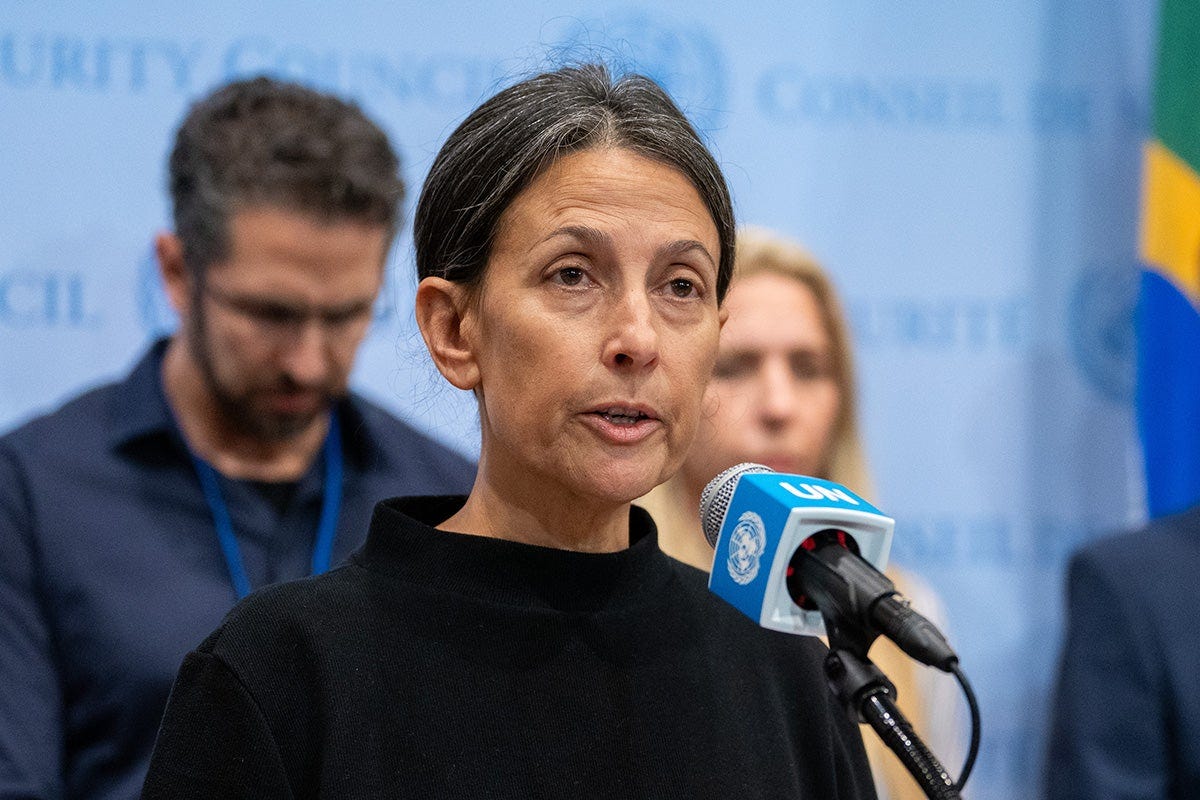
Her son Hersh was taken from the Nova festival on 7 October 2023 and murdered in captivity. In the months between, and in the months since, she became one of the most visible advocates Israel has had on the world stage. She addressed the United Nations General Assembly in New York within weeks of the attack. She spoke at the United Nations in Geneva on the seventy-fifth anniversary of the Universal Declaration of Human Rights. She stood before the largest pro-Israel gathering in American history at the March for Israel in Washington. She was received twice by Pope Francis at the Vatican. She met repeatedly with the President and Vice President of the United States. She was named to the TIME 100 Most Influential People of 2024. In August 2024 she addressed the Democratic National Convention, where tens of thousands rose to a sustained chant of “Bring them home.”
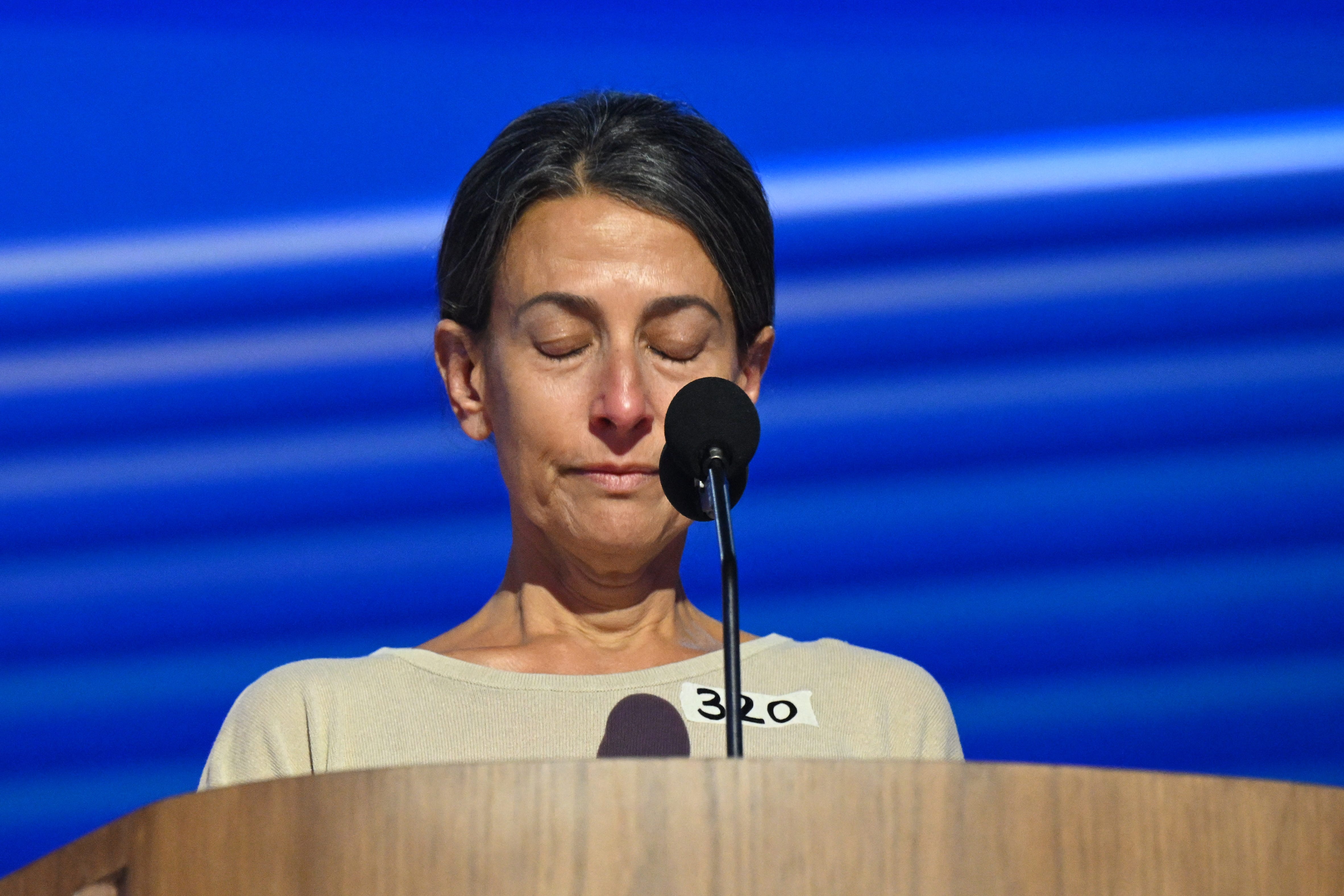
What she said in those rooms is as important as the fact that she was in them. At the Democratic National Convention she described a surplus of agony on all sides, and observed that in a competition of pain there are no winners. She refused, in the worst circumstance a person can be handed, to dehumanize anyone. She spoke in the Jewish idiom and to a watching world at the same time, and she was heard by both.
This is the rarest political quality there is, and she did not acquire it through politics. She has no party, no faction, no record of partisan office to defend or to answer for. Her standing is entirely moral and entirely representative. That is the precise profile the office was designed for, from Einstein forward.
On the formal requirements there is no obstacle. Section 4 of the Basic Law makes every Israeli national resident in Israel eligible. There is no minimum age, no requirement of prior office, and no bar that touches her. She is qualified the moment her name is placed in nomination.
V. Why There Is No Other Choice
Four objections are usually raised against a candidate from outside political life, and the case for Rachel Goldberg-Polin answers each of them rather than avoiding them.
The first is the demand for probity. Since the conviction and imprisonment of Moshe Katsav, Israelis have treated the personal character of the President as a non-negotiable threshold rather than a courtesy. This is the strongest argument for her, not against her. A candidate whose entire public standing rests on moral consistency under unimaginable pressure clears that threshold more cleanly than any politician could.
The second is the abolitionist critique, which surfaces in the Knesset every few years and holds that the office is an expensive symbol whose functions could be absorbed elsewhere. The honest answer is that the critique is correct about most presidents and wrong about the office. An empty symbol isn’t worth its cost, but a genuine one is close to priceless. The way to refute the argument that the presidency is a hollow ornament is to fill it with someone whose symbolic authority is real and uncontested. Her election would be the strongest available answer to those who would abolish the post.
The third is the worry that a non-political figure cannot do the job. The record above is the rebuttal. She has already done the job, without the title, in the United Nations and the Vatican and the White House and on the floor of an American political convention. The question is not whether she can grow into the office. The question is whether the office can rise to her.
A fourth worry is quieter, and it cuts the other way. It is that politics will sully her, that the arena will wear down a moral authority earned at unbearable cost. But the arrow points in the wrong direction. The danger is not that Israeli politics will diminish Rachel Goldberg-Polin. It is that the gravity of her existence might finally elevate Israeli politics. Put a figure the country cannot shrink into a faction at the head of the state, and the office does not drag her down to its level. She lifts it to hers.
There is a harder truth underneath all of this, and the memorandum should not pretend otherwise. To elect Rachel Goldberg-Polin is to ask a woman who lost her son to the worst day in the country’s history to become its public face. That is a great deal to ask of anyone, and it would have to be asked, not assumed. But the asking is itself the point. A nation that took its representative figure from among those who paid the highest price, and who carried that price into the world without bitterness, would be telling the truth about itself. The office has been waiting a long time for someone who could do that. It need not wait any longer.
VI. Recommendation
That the Knesset, at the next election for the office, nominate and elect Rachel Goldberg-Polin as President of the State of Israel.
Respectfully submitted,
Adam Hummel
You make an excellent case, Adam. I wonder if she’d entertain this.