
Our Bathurst Pilgrimage
Walk With Israel 2026

Three times a year, in the world we lost, Jews walked.
They went up to Jerusalem on foot for Pesach, for Shavuot, for Sukkot, and the act had a name: Aliyah l’regel. Going up by foot. It wasn’t a metaphor. It was a road and dust and tired legs, the slow gathering of a scattered people into one place at one time.
Then the Temple fell, and the road lost its destination.
The walking, somehow, we kept.
Canadians walk
I thought about that today, standing on Bathurst Street while 60,000 people moved past me.
Our entire framework for how to live is built on a verb of motion
Sixty thousand. More than last year. In a year that was built, whether anyone meant it or not, to make us tired and quiet, to make us small, sixty thousand of us laced up and showed up and walked. There were strollers and there were walkers and there were dogs and there were grandparents who set the pace for everyone behind them. There were flags, and there was singing, and there were allies (thanks guys!), and there was the particular noise a crowd makes when it simply isn’t afraid. The police were there, as were the Shomrim and the Jewish Security Network. And the day was, by every measure that matters, peaceful and beautiful and ours.
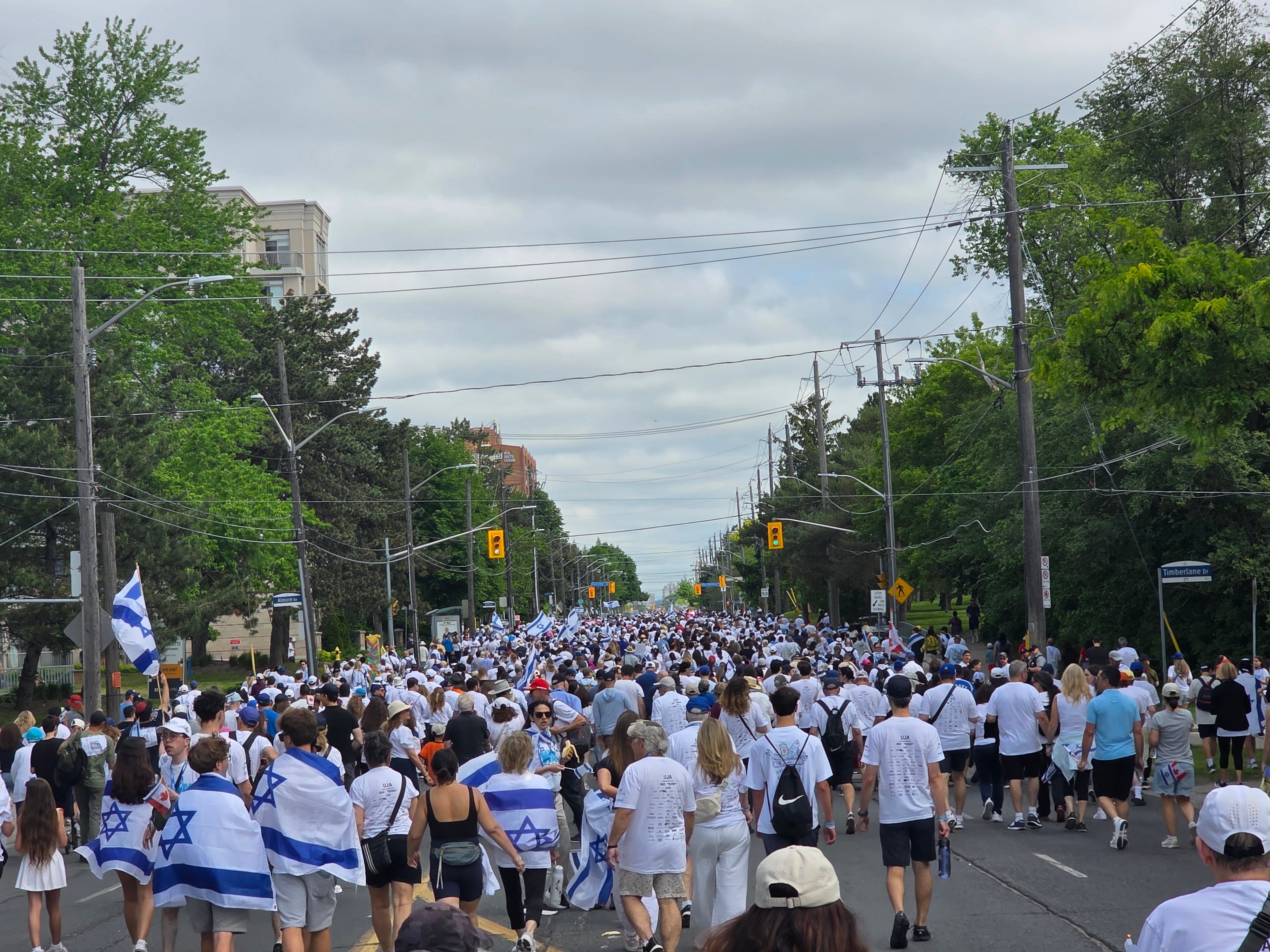
We are a walking people. We always have been.
The word for Jewish law is halacha, and it comes from the root that means to walk, to go, the way. Our entire framework for how to live is built on a verb of motion. The story starts with lech lecha, go, get up and go, leave the place you know. It runs through forty years in a desert. It runs through every expulsion and every crossing, every death march and exile and every harbour our great-grandparents arrived in with everything they owned in a single bag. For many years we have not been a people defined by where we are rooted. We are defined by the fact that we keep moving, and that we carry the whole inheritance with us when we do.
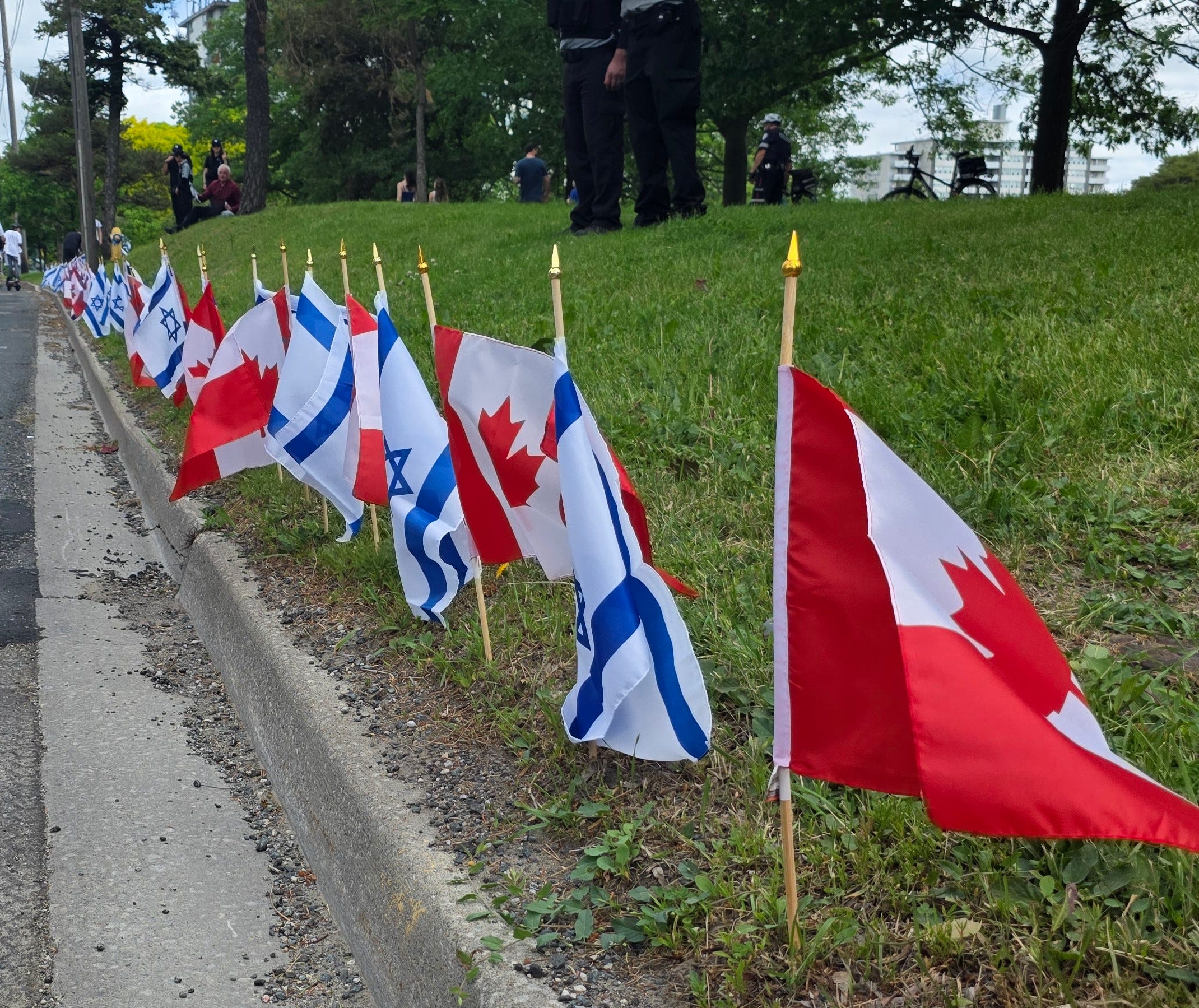
Our pilgrimage
Which is why the Walk is not really a fundraiser, though it raised a lot of money, and it is not really a demonstration, though the world should take note.
It’s a pilgrimage.
It is the closest thing the Diaspora has built to aliyah l’regel, and we built it ourselves, out of nothing but the need to gather.
Notice the shape of it. The route ran from Temple Sinai up to the UJA’s Sherman Campus, and then it was over, and everyone went home. We didn’t ‘arrive’ anywhere. There was no Temple at the top of Bathurst Street. The walk loops back into the ordinary city it borrowed for a morning. And that’s the point! In exile you lose the destination, but you keep the road, and you learn to make the road itself the holy thing. For a few hours, a stretch of Toronto was the nearest the Diaspora had to Jerusalem, and what waited at the end of it wasn’t a building or a wall. Excuse me for being cute, but it was each other.
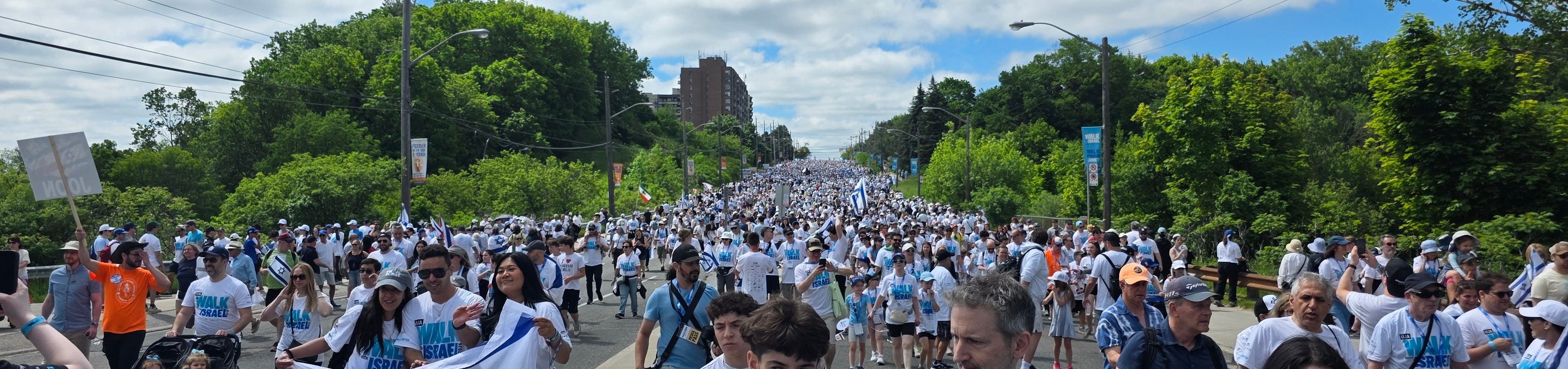
Our Canada
I’ll say something about Canada, too, because we must be honest about how rare this is.
There are not many places, and there have not been many centuries, where 60,000 Jews could walk through a major city in broad daylight, flags up, voices up, and come home safe. We did that today. We did it in a country that made room for it, with neighbours and allies who walked beside us, with a city that rerouted its buses and traffic so we could have the street. Yes, there are a lot of problems with Canada, especially those that have been highlighted in the last week, but that is not nothing. By the long and bitter standard of Jewish history, that is close to a miracle. We are allowed to say so and worry about the future of this country and be glad of a country that let’s us be fully Jewish and fully Canadian on the same morning, with no contradiction asked of us between the two.
The road still has no Temple at the end of it. It never will, not on Bathurst Street, not in this exile. We walked it anyway. We will walk it again next spring and the one after that, and we’ll count ourselves as we go, and the count will keep coming out to tens of thousands no matter what the year before tried to do to us.
That is the oldest Jewish thing there is.
Not the arriving.
The walking.
Together, toward each other, with the whole inheritance on our backs and somewhere still to go.
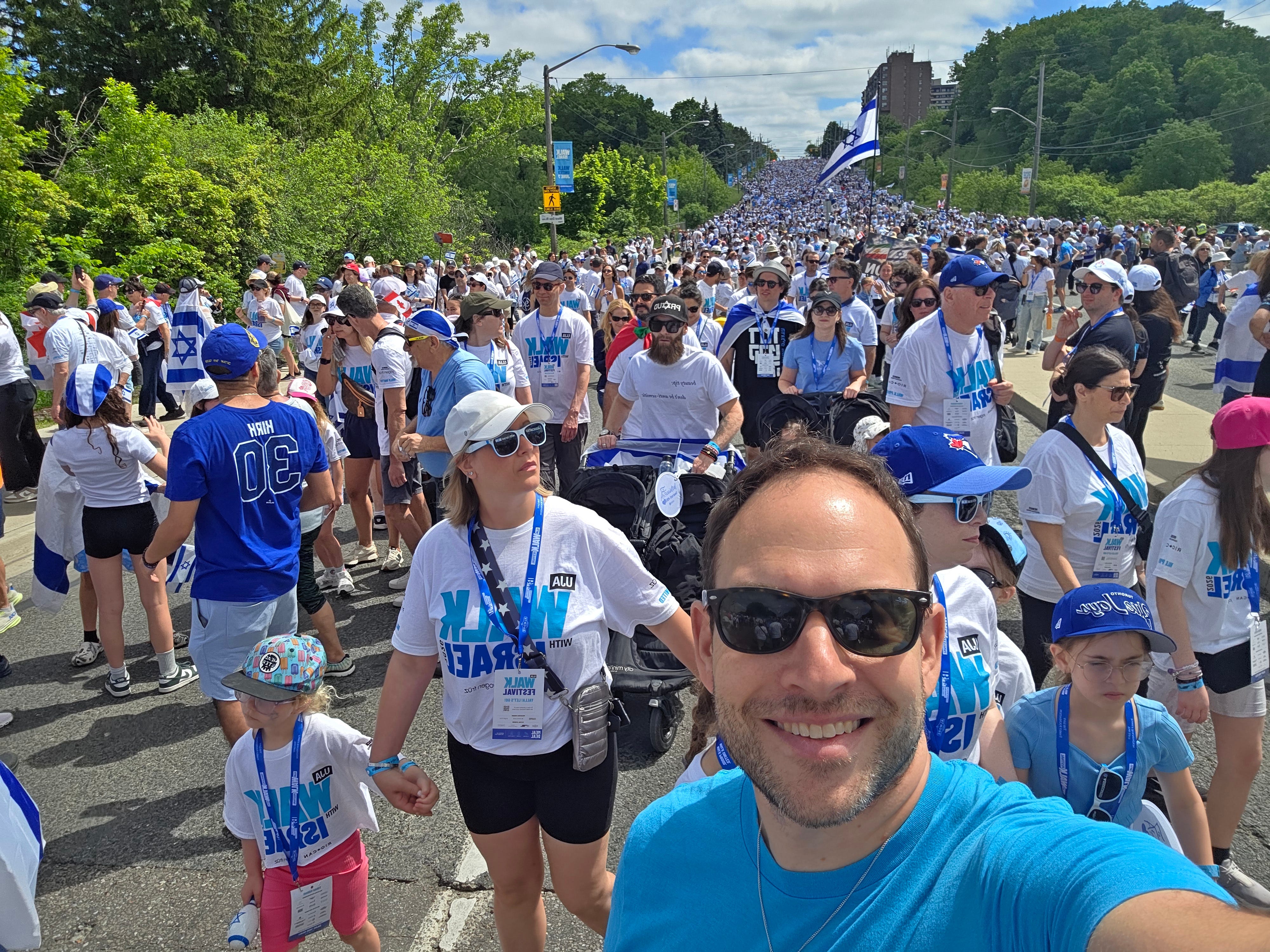
Kol ha’kavod to UJA and all those involved in organizing this great event.
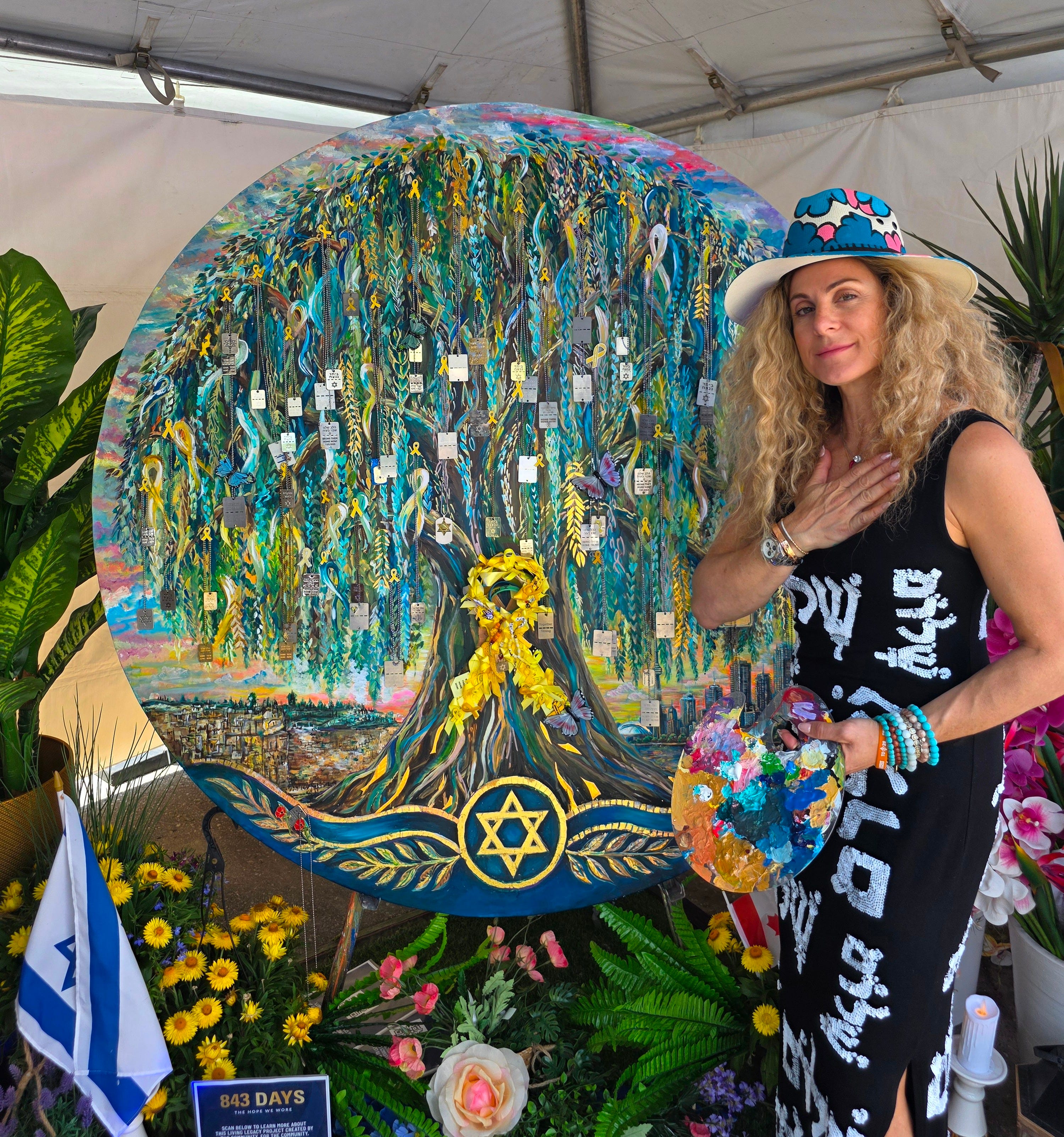
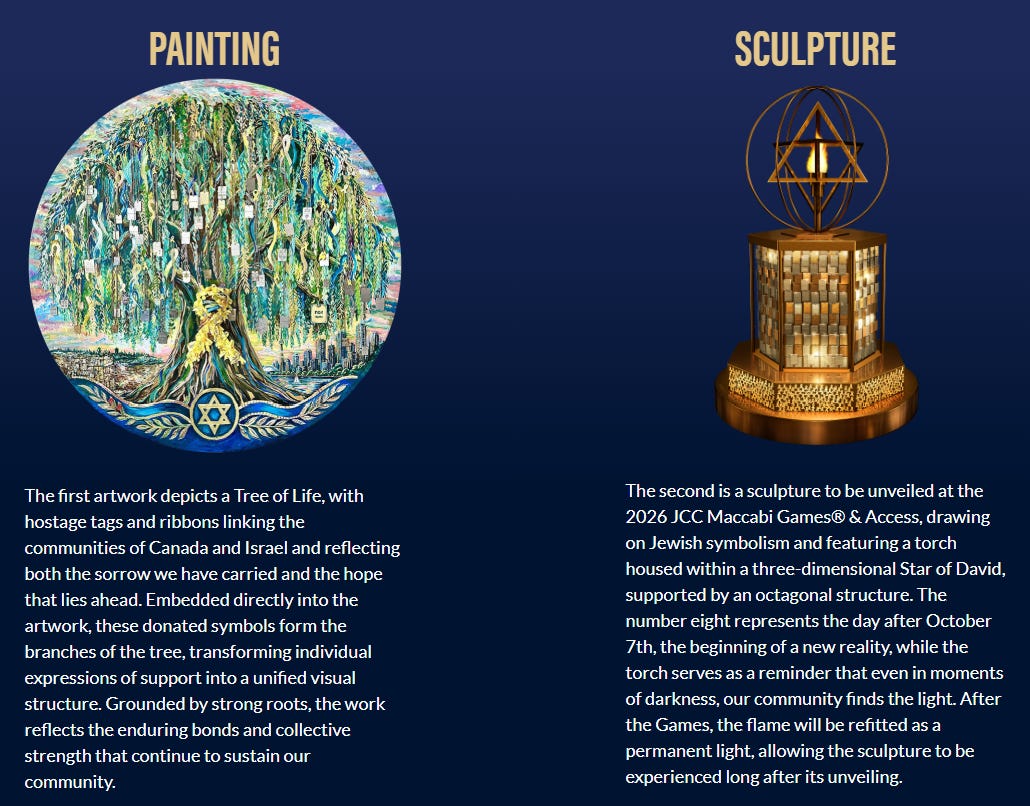
Our community is also now coming together to create a special October 7 memorial, designed by local artists. Many of you have already donated your yellow ribbons or dog tags to contribute to this project. I’m proud to be involved, and ask you to please consider making a small gift of $18 to help bring these community memorials to life and preserve their message for future generations. You can donate here.
Here’s the Catch
We are a walking people before we are anything else. The word ‘halacha’ means the way, the story starts with go, and we have always carried our inheritance on the road rather than at a fixed address. Three times a year we once walked up to Jerusalem, and when the Temple fell we lost the destination but kept the walking. The Walk With Israel is what that walking became in exile, a pilgrimage we built ourselves, looping back into the city because there is no Temple at the top of Bathurst Street and the destination was never a place. It was each other. 60,000 of us made it this year, in a year designed to wear us down, and we made it here, in a country that let us be fully Jewish and fully Canadian on the same morning. The road still has no Temple at the end of it. We walk it anyway. That is the point.
For me, this essay is tremendously uplifting and encouraging. Thank you, Adam. I read everything you post on Substack. I am a dual Canadian and British citizen and a proud Jew. I moved from Vancouver to England only two years ago. Of course I follow what’s been happening in Canada. Your posts are important to me.
Proud to be Jewish today, but Canadian - not so much. Our country has let us down, big time, led by our current government.