
The Very Small Partner
What Suez in 1956 already taught us about Trump’s deal with Iran

Last week, an American president stood in a French palace, signed a memorandum ending a war that America began with Israeli support, a war Israel was then forbidden to finish, and called the prime minister of Israel his “very small partner.” He said it almost fondly. Bibi gets excited, Trump explained. We are the big partner. He is the small one.
When trying to make sense of the present, I often go looking for it in the past. Not for comfort necessarily, but because the present is bad at telling you what it actually is, and the past is better at it. So when I read that phrase, very small partner, I went looking and found that I had read this script before. The setting changes, the waterway changes, the enemy changes. The structure, not so much. A great power decides that Israel’s war has gone far enough, ends it on terms Israel didn’t write, reopens a waterway, and offers, in place of victory, a dangerous guarantee.
Let me tell you about the last time.
The villa at Sèvres
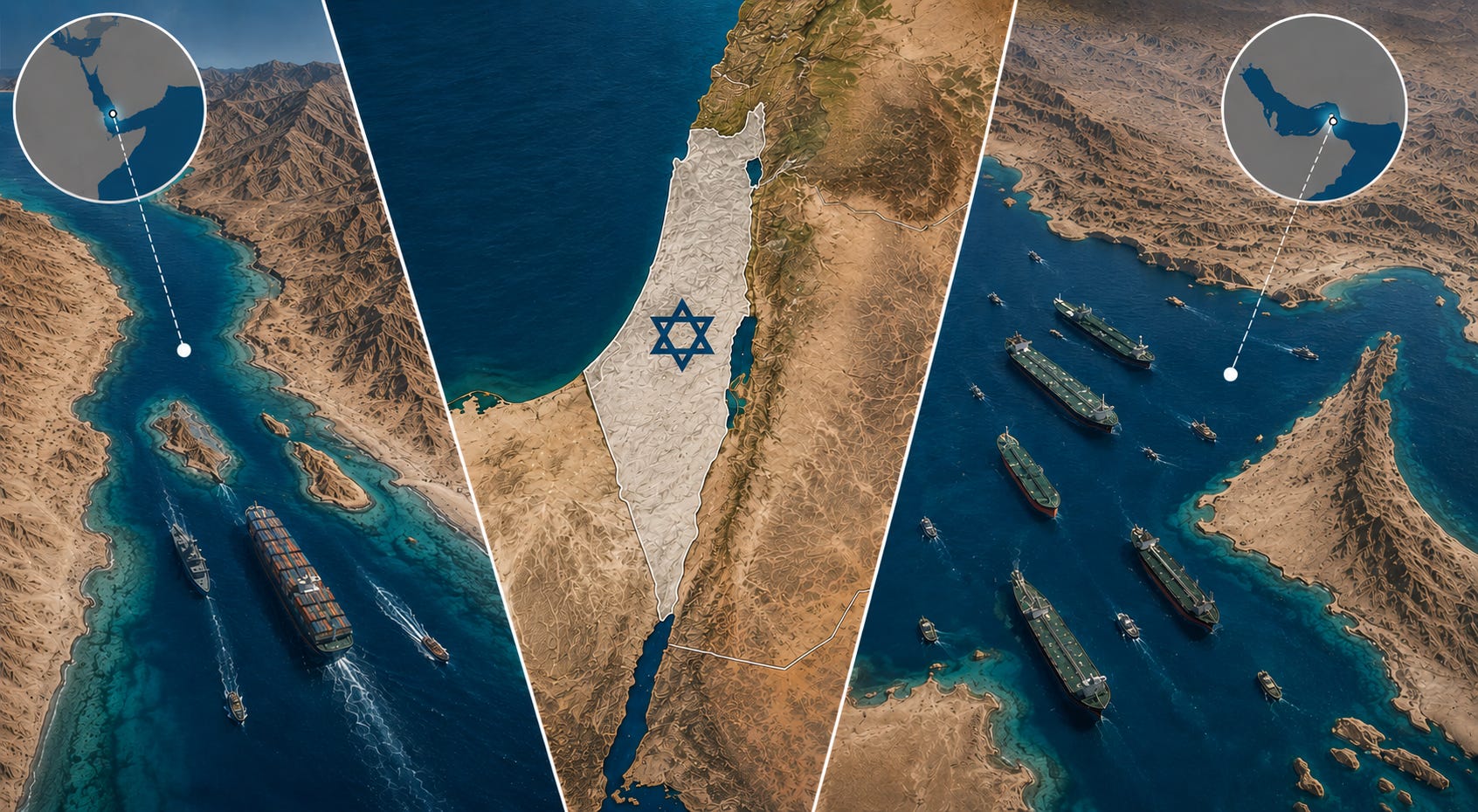
In the summer of 1956, Egypt’s Gamal Abdel Nasser nationalized the Suez Canal. Britain and France, who still imagined themselves empires, wanted him gone. They conspired in secret with Israel at a villa outside Paris, in the suburb of Sèvres, over three days in late October. The plan was a piece of theatre: Israel would invade the Sinai. Britain and France would then sweep in to separate the Israeli and Egyptian combatants and seize the canal, as though they were peacemakers and not the actual authors of the war.
Israel had its own reason to play the part. For years Egypt had blockaded the Straits of Tiran, choking off Israeli shipping to the south, strangling the port of Eilat. Freedom of navigation was a real Israeli interest, not a pretext. So Israel invaded on October 29, 1956, and went deep into Sinai.
And then Washington ended it.
Dwight Eisenhower had not been told. He learned of the invasion the way you learn of a betrayal, after the fact, from people other than the ones who owed you the truth. He was furious. He didn’t issue a stern statement. He waged financial war on his own allies. The United States blocked Britain’s credit at the International Monetary Fund. It blocked a loan from the Export-Import Bank. It threatened to dump its holdings of British sterling, which would have collapsed the pound while Britain’s reserves were already bleeding out. Oil was withheld. Within days the British government folded, and with it the last pretension of European power in the Middle East. Prime Minister Eden resigned that January.
Israel held on longer. It took until March of 1957, and relentless American pressure, before Ben-Gurion agreed to give the Sinai back to Egypt. He didn’t return it for nothing. He extracted assurances. The Straits of Tiran would stay open. Israeli ships would reach Eilat. A United Nations Emergency Force (the brainchild of Canada’s Lester B. Pearson) would stand in the Sinai as a buffer, and, he was told, it could not simply be waved away on Egypt’s say-so. This was the consolation prize. Israel surrendered the territory it had conquered and received, in exchange, a guarantee. An international promise. A piece of paper about an open waterway.
Hold onto that piece of paper.
What the paper was worth
It was worth nothing in just ten years.
In May of 1967, Nasser unilaterally ordered the UN force out of the Sinai. The UN, to its lasting shame, complied at once. Then Nasser closed the Straits of Tiran to Israeli shipping, the exact act that Israel had warned, in 1957, it would treat as a cause of war. 90% of Israel’s oil came through that strait.
So Israel went to the guarantors. It sent Abba Eban to Paris, to London, to Washington, to call in the promise of 1957. And the guarantors discovered they had urgent business elsewhere. France, under de Gaulle, had made its peace with the Arab world after losing Algeria, and was no longer interested. Washington was drowning in Vietnam and in no mood to force open anyone’s strait. De Gaulle admitted, to Eban’s face, that yes, the commitment had been made. It simply would not be kept.
Lyndon Johnson later called Egypt’s closing of the Straits of Tiran the single act of folly most responsible for the war that followed. He was right about the folly. He was quiet about the other half of it, which is that the United States had promised, a decade earlier, that this exact folly would never be allowed to stand, and then allowed it to stand.
Israel opened the strait itself, in June, by force, alone. Miraculously, in just six days. It has not leaned on a guarantee about Tiran since, because there was nothing left to lean on. The guarantee had been written in water.
The same sand
Now look at last week.
The United States went to war with Iran in February, with Israel alongside it. Never had two more formidable air forces fought together for a more just cause. Whatever you think of how it started, the ending is the part that should hold your attention. Because the ending is 1956 again, with the furniture rearranged.
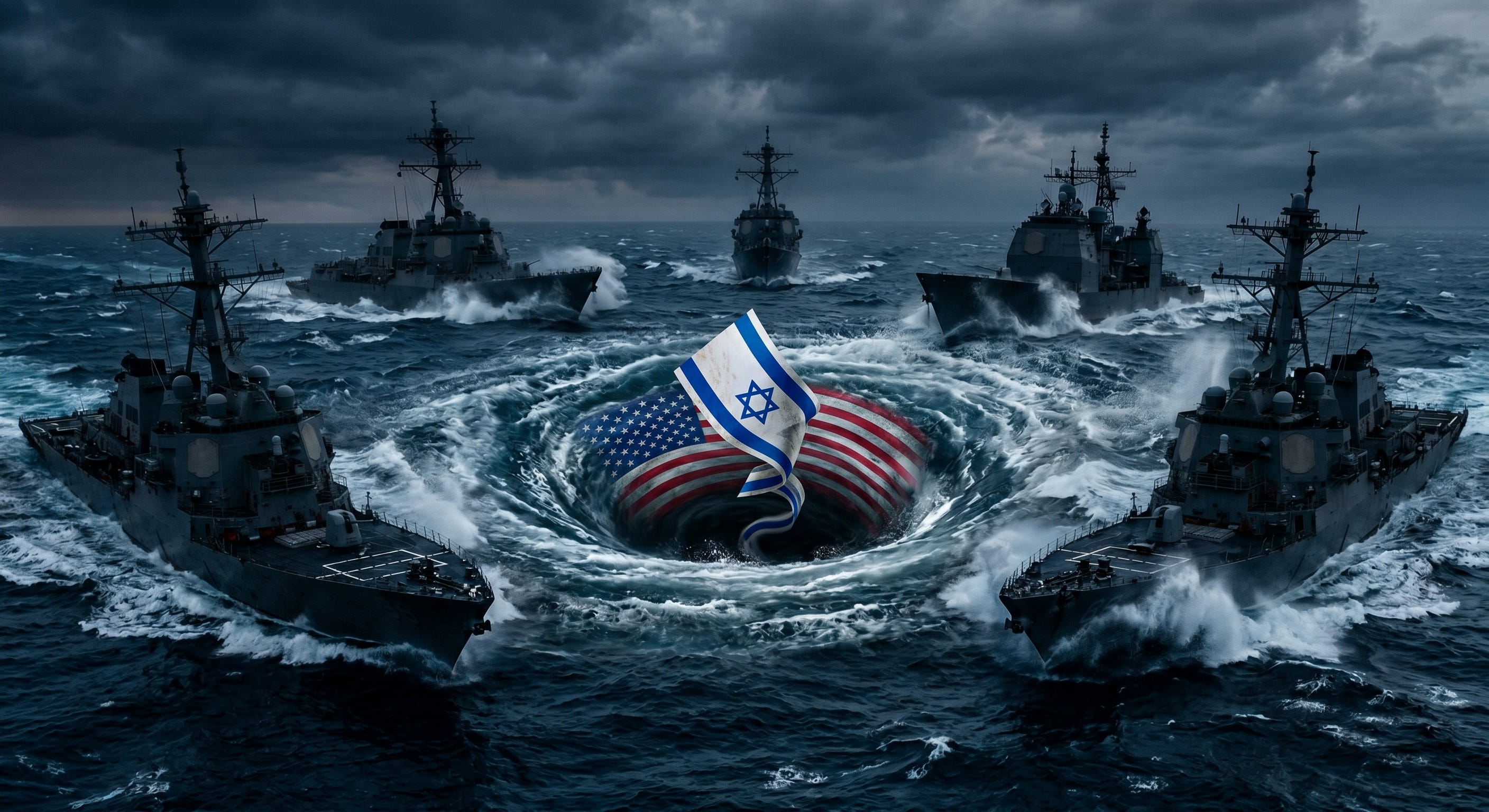
The war is being closed on American terms. Israel was not in the room. It was not shown the text of the memorandum of understanding (MOU) until after the fact. The centrepiece of the deal is a waterway: the Strait of Hormuz, reopened, the American blockade lifted, the oil flowing. There is a guarantee architecture, of course. There always is. Toll-free passage, but only for sixty days. A future administration of the strait, to be worked out later by Iran and the Gulf states. A $300 billion dollar fund (!!!) to rebuild Iran, to be paid for by the same Gulf neighbours Iran spent the spring bombing.
It’s the same sand. A temporary arrangement dressed as a permanent one. A promise about an open strait that depends entirely on the interests of powers who will have moved on by the time it is tested.
But here’s the cruelty in the 2026 version, the detail that makes it way worse than 1956. Back then, the open strait was at least Israel’s prize. Tiran was reopened for Israeli ships. This time the strait is opened for Iran. Israel does not even get the consolation. It gets the bill, the surviving enemy, and a patron who stood at a microphone and called it the very small partner.
And the patron is already turning away. Trump’s whole posture toward the region is transactional now, Gulf-facing, allergic to long wars. Scared of lengthy engagements, even the ones he started. He has said, more or less, that he keeps no permanent enemies. He thinks that Hamas recently hasn’t been that bad, and he has essentially faulted Israel for the conflict with Hezbollah. The future he is building runs through Riyadh and Abu Dhabi and the reconstruction of Tehran, and Israel is a line item in it, not the point of it.
The lesson of two straits
So here is what I take from the two straits, seventy years apart.
A guarantee from a great power is not a gift. It’s a loan, and the great power decides when to call it and when to let it lapse. The open waterway that someone else’s navy opens for you is a waterway that someone else’s navy can close against you, or simply decline to keep open, the moment its attention drifts. Tiran in 1957 was a solemn international commitment, and it dissolved the first time it was tested.
The deeper danger is not that the guarantee fails. It is what the guarantee does to you while you still believe in it. It teaches you to stop guaranteeing yourself. It persuades you that your security has been subcontracted to someone larger and kinder, so that you can lay down the heavy work of holding the strait open with your own hand. And then the day comes, and the larger kinder power is in Vietnam, or in Versailles, or simply in love with a deal, and you discover that the only freedom of navigation you ever truly held was the kind you took and kept yourself.
The trajectory of the small partner runs in one direction. In 1956 Israel was the junior member who at least got the strait. In 2026 it is the very small partner who gets nothing. If you let someone else define how small you are, they will keep refining the number downward, because it costs them nothing and it flatters them to do it. We cannot take anything for granted.
And so, as Haviv Rettig Gur wrote last week: What does this all mean?
It means that in the coming years, nuclear programs will sprout like mushrooms after the rain throughout the Middle East. It means that many nations will now build out new and larger ballistic missile arsenals.
Minorities will again be trampled, new wars will be fought by stronger states to dominate the power vacuums within weaker ones.
You're thinking of Israel in Lebanon -- but that's just a specific campaign against a specific enemy. Think Turkey, which right now occupies a region of Syria vastly larger than Israel's presence in Lebanon. Think heightened Iranian support for the Houthis in Yemen and a new influx of money and guns to the different sides in Libya.
It means, in other words, that we will have a few more wars to fight, a few more technologies to invent to deal with this new age of cheap missiles and drones -- and also of supersonic Chinese missiles bearing nuclear warheads that Iran will eventually, inevitably, be capable of deploying against us.
And it didn't have to be this bad. (And maybe, when he's heard all the criticism, it won't be.) He could have left something, anything, to concede later. He could have kept the Iranians a little bit in the dark, just a smidgen, as to just how defeated America feels.
Israel's position in all this is simple, and more or less unchanged from last week. America gave us more than we had a right to ask for. But we may be going it alone from here out.
Dust off the nukes. Maybe test one somewhere far away from anywhere. Quadruple the interceptor production lines, double the size of the Mossad and the Air Force. And no, don't let Hezbollah breathe, not for a second.
It's the 1960s again. And Israel will have to defeat a couple more enemies before it can once again eke out a few decades of peace.
Here’s the Catch
Twice now, seventy years apart, Israel has won a war it was then forbidden to finish, and twice the consolation has been a promise about an open strait. In 1956 the promise was Tiran, and it was worthless within a decade, dishonoured by the very powers who made it, leaving Israel to open the strait alone in 1967. In 2026 the promise is Hormuz, built on the same sand, except that this time the strait is opened for Iran whereas Israel is not even handed the paper. The lesson is not that guarantees sometimes fail. It is that a guarantee from a patron is a loan taken out against your own sovereignty, and the interest comes due exactly when you can least afford it. The most expensive illusion in our history is the one that keeps coming back, the one that whispers that someone bigger will keep the water open for us, so that we need not keep it open ourselves. Trump called Israel the very small partner. The insult is not the danger. The danger is in how easily a people can be talked into believing it, and into setting down the one thing no guarantee has ever replaced. Take nothing for granted.
A great read. As for Haviv Gur’s comments, it’s not hard to imagine a future in which Iran launches a nuclear-tipped warhead at Israel, Israel uses some yet-to-be-developed technology to intercept it before it reaches its target, and the warhead detonates over a sparsely populated area of Iraq or Jordan. Yet somehow, Israel ends up bearing much of the blame for the resulting fallout simply because it dared to defend itself.
In a world where cause and effect can be so thoroughly inverted, it’s not surprising that many Israeli politicians, and many Israeli voters, place little weight on what the outside world thinks.
Brilliant insight and analysis. Sadly and once again Israel is left alone to clean up the mess left behind by so many who just should known better. 🤦🏻♀️