
The Whole Mosaic
July 9: Blue

Today, the country handed me a great deal of blue.
We began in Tel Aviv, on the beach, with the Mediterranean running that impossible blue all the way to the edge of the world. Yesterday we were standing in the Nova field. This morning I was standing at the sea, and the distance between those two places, an hour or so up the coast, is the thing this whole country somehow holds.
Caesarea
We drove up that coast to Caesarea, where Herod built a city to flatter Rome and the blue Mediterranean has been quietly taking it back ever since. We toured the amphitheatre and the hippodrome ruins, the harbour stones, and saw the aqueducts from afar. There, perhaps more than elsewhere in the country, you feel the whole weight of what Rome was, the empire that ruled this coast when it was called Judea and later renamed it Syria Palestina, trying to erase us from the map once it found it couldn’t erase us from the earth. We’ve always been stubborn, no?
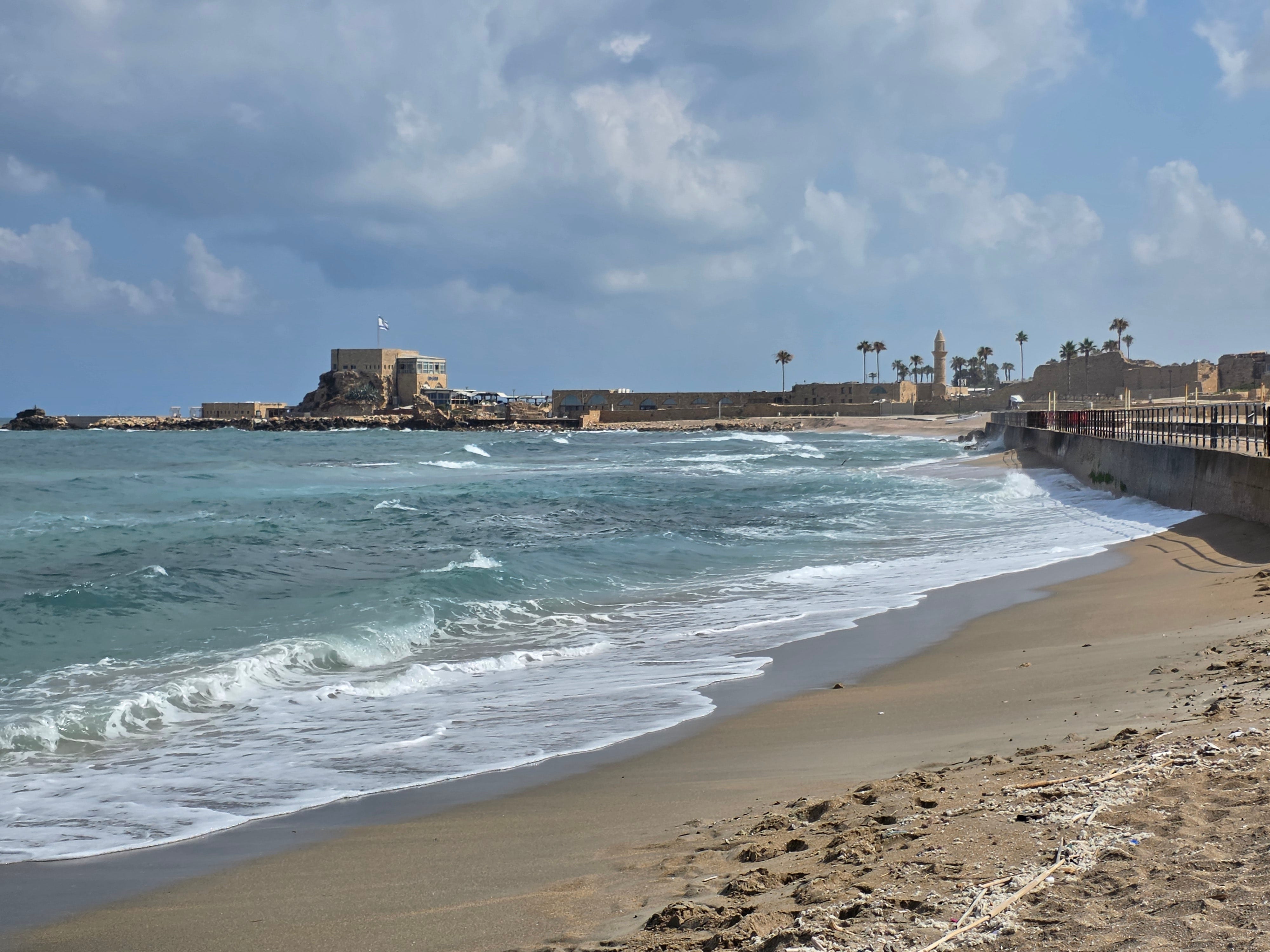
And then you consider the man who built the place. Herod was a Jewish king, Jewish enough by blood, and in almost every way that counted a traitor to his own people, a client of Rome who paved his kingdom with his masters’ vanity. Here’s what’s important about Herod: what he left, the stone, the harbour, the ambition, is still standing, and it stands now inside a Jewish sovereign state that outlasted Rome, outlasted the name Rome tried to bury us under, and came back to walk through his ruins as the owners of the ground. Herod may have served the empire, but we buried it. His stones are a day trip in our country now, complete with selfies, bathroom breaks, and wisps of the salt sea in our hair. Visit the gift shop on the way out.
Haifa
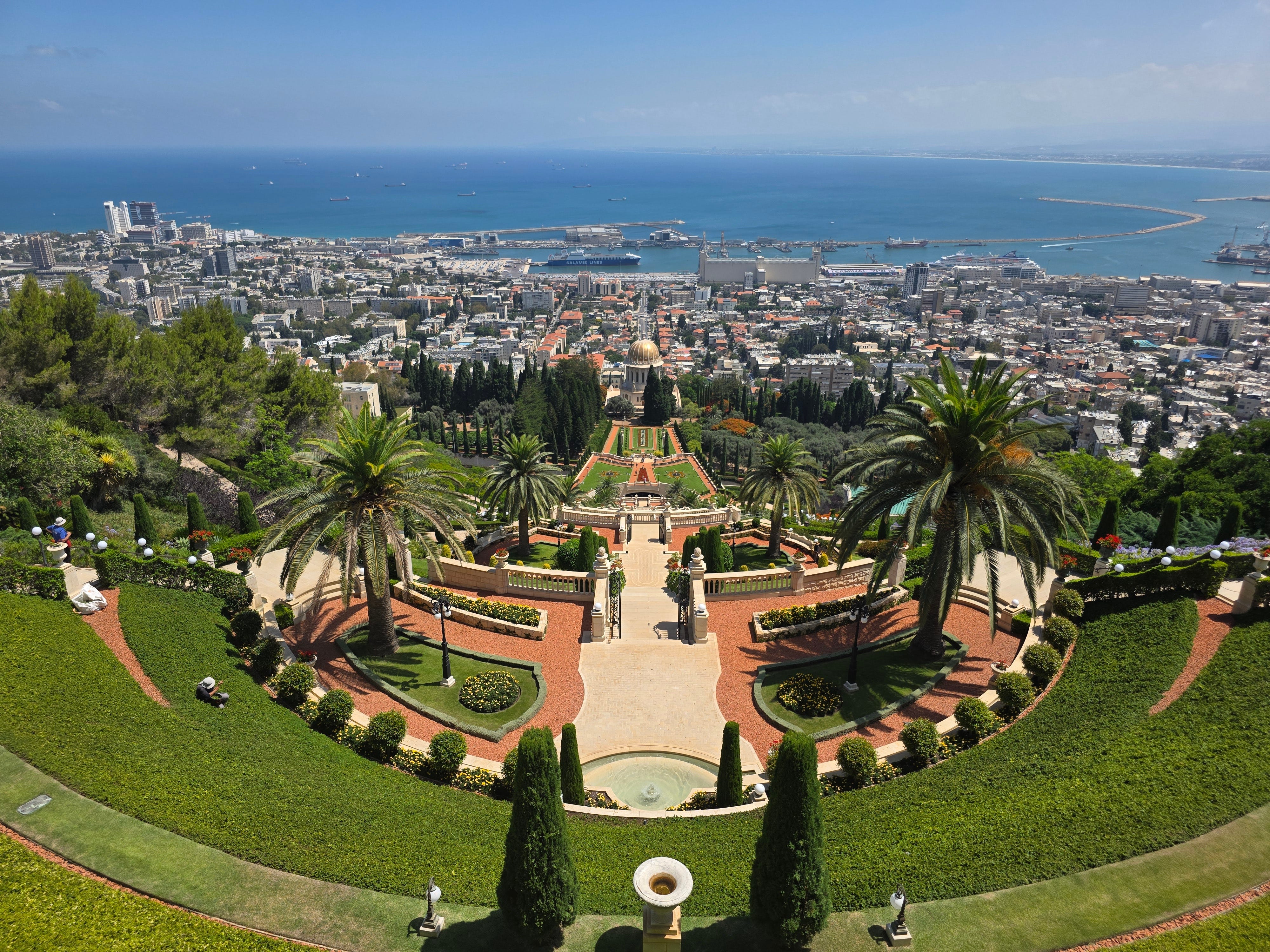
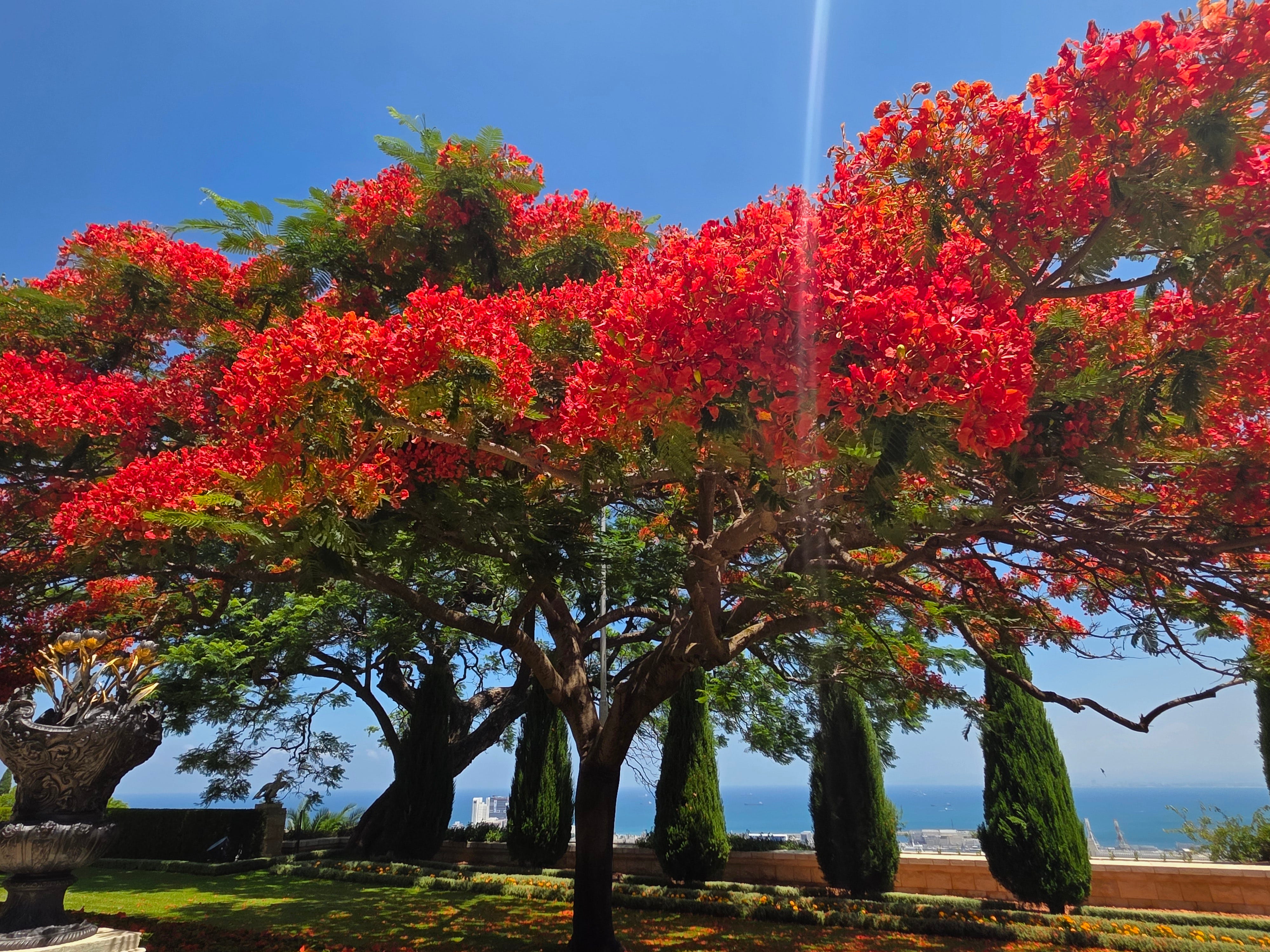
From Caesarea to Haifa, and the Baha’i Gardens spilling down the mountain in nineteen perfect terraces, the blue of the bay laid out beneath them under a cloudless blue sky. I’ve never been inside those gardens, and they are just totally immaculate and fascinating. We learned who the Baha’i are, where they come from, what they hold sacred, and this reminder: the holiest place on earth to the Baha’i faith, those persecuted of Islam, is here, in Haifa, tended and guarded inside and by the Jewish state. The guard reminded me that Israel’s declaration of independence guarded minority religious rights in the new state, and the Baha’i Gardens are exact proof. A people that knows better than almost anyone on earth what it is to have your holy places taken from you has made itself the keeper of someone else’s. Both deep confidence and deep decency, in my opinion.
Daliat el-Carmel
And then up into the Carmel, to the Druze village of Daliat al-Carmel and a restaurant called Nurah’s Kitchen, to a Druze table that honestly could have fed an army. Nurah was there, and she welcomed us warmly. She fed us plentifully. On the wall, they had written this line:
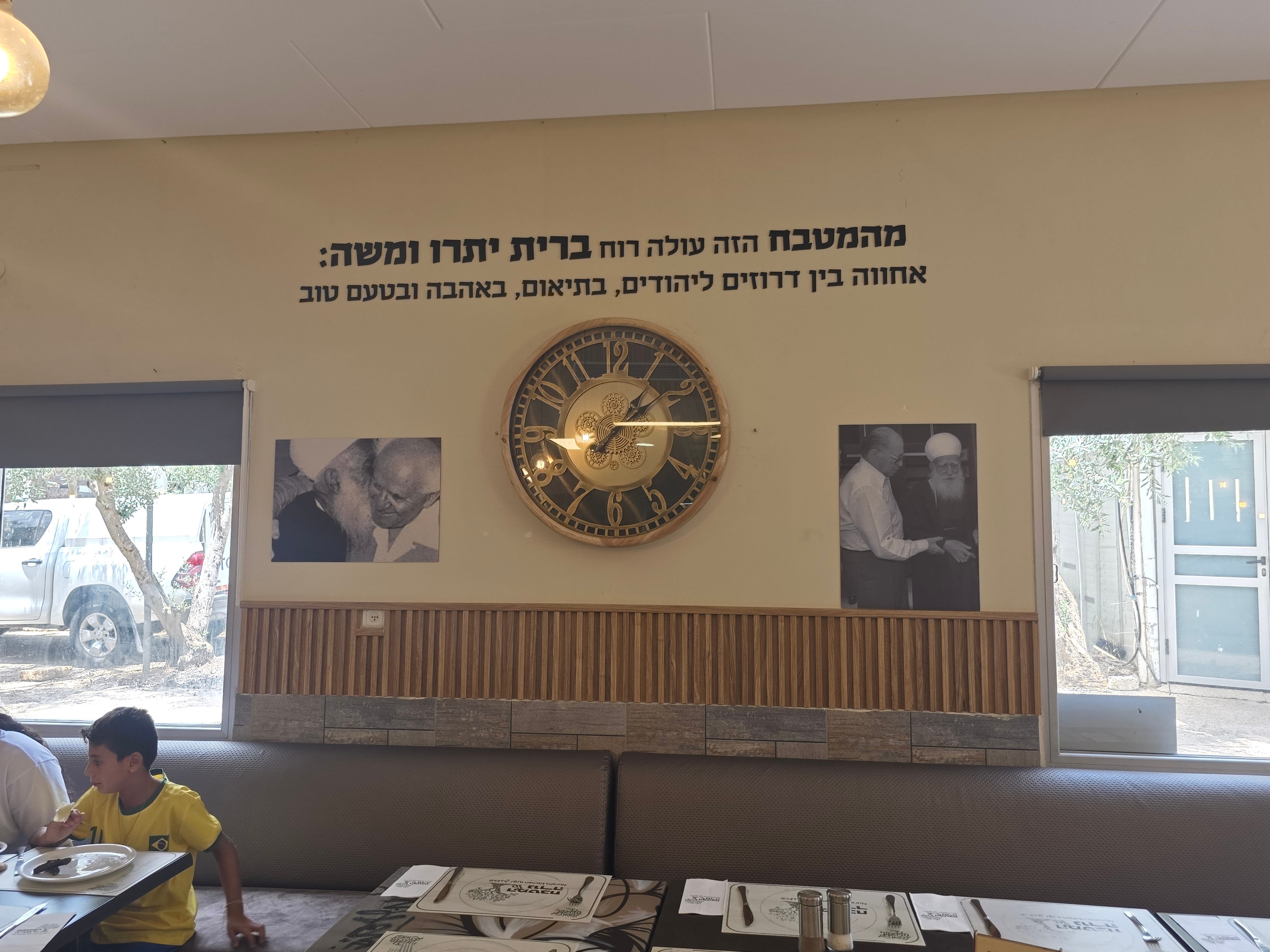
“From this kitchen, comes the atmosphere of the covenant of Yitro and Moses: Brotherhood between the Druze and the Jews, in coordination, love, and good taste.”
It traced the brotherhood between the Jews and the Druze all the way back to Moshe and Yitro, to Moses and the father-in-law who took him in and counselled him, the Midianite priest the Druze revere as their own great prophet. Not a modern alliance of convenience, then, but a bond with its roots in the Torah itself. And you feel it at the table and in the town. The Druze are loyal Israelis in a way that runs deeper than citizenship. They serve in the army, they bury their sons under the flag emblazoned with the Jewish star, and they have taken the blue and white of that flag and made it their own, not because anyone required it of them, but because this is their country and they have chosen to defend it. The blue of this day turns out to be the blue of a flag that two peoples fly.
Zichron Yaakov
On the way back we stopped in Zichron Yaakov, one of the very first Zionist villages in the land, planted on this hillside in 1882 when the hillside was mostly malaria and boulders. My favourite town in Israel, Zichron has a quaint main pedestrian street with gift shops and restaurants, and it oozes tradition and the sacredness of time past.
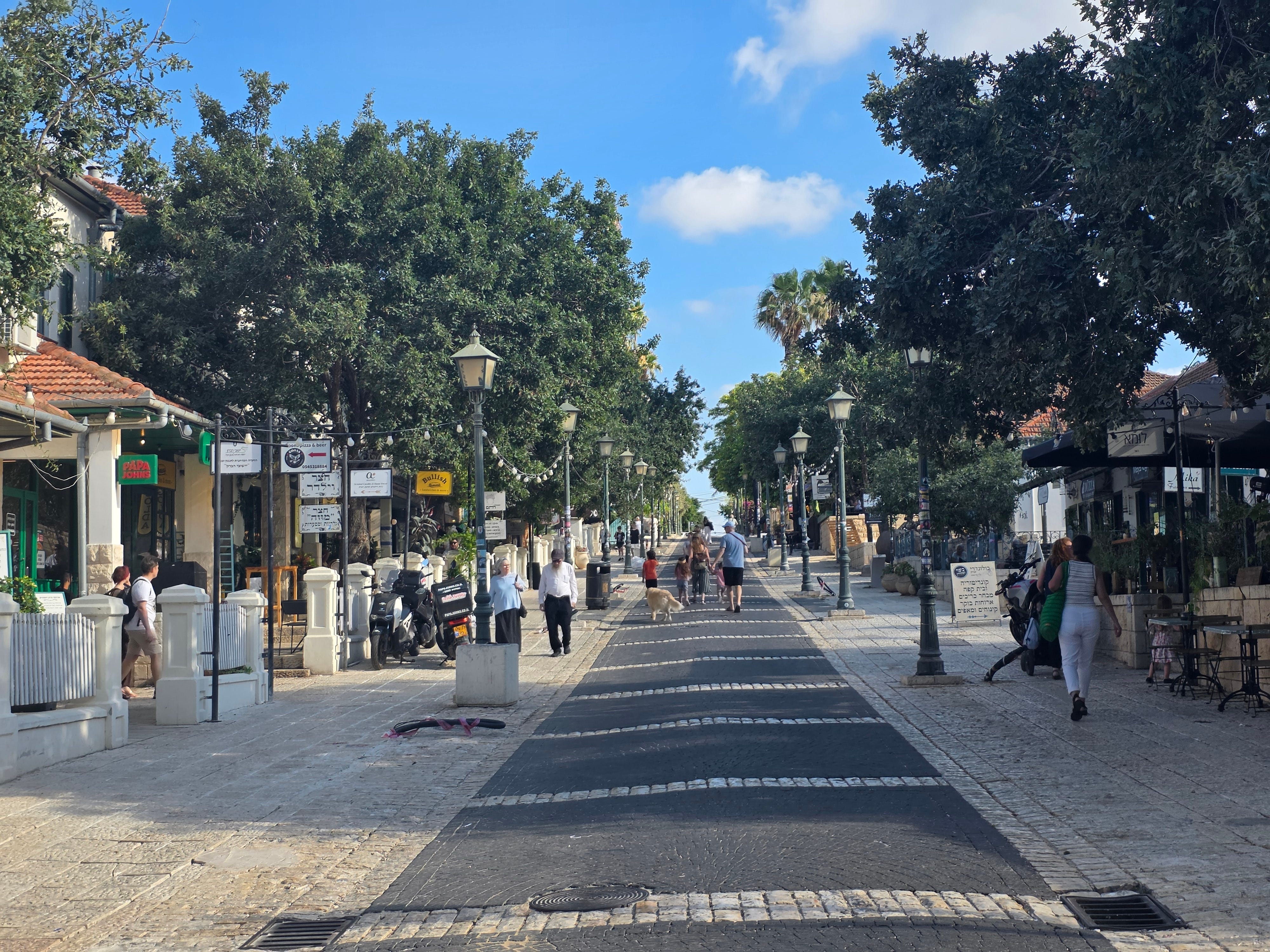
I got to tell the group a little of its history, and in particular the story of the Aaronsohn family, of Aaron and his sister Sarah, who ran a spy ring called NILI out of their own house to help the British prise this land loose from the Ottomans. Sarah was caught and tortured and took her own life rather than give up the others. They bet everything they had on the idea that this hillside would one day be governed by Jews, and neither of them lived to see a day of it. You can stand at the Aaronsohn house and look straight down the slope to the sea, blue again, the same blue, and doing so, it’s impossible not to feel that Sarah died looking more or less in this direction, at a country she was buying for people she’d never meet.
On our way out, we also stepped, briefly, into the Great Synagogue of Zichron, Ohel Yaakov, built in 1886, which has a real claim to being the first modern Zionist synagogue raised in this land.
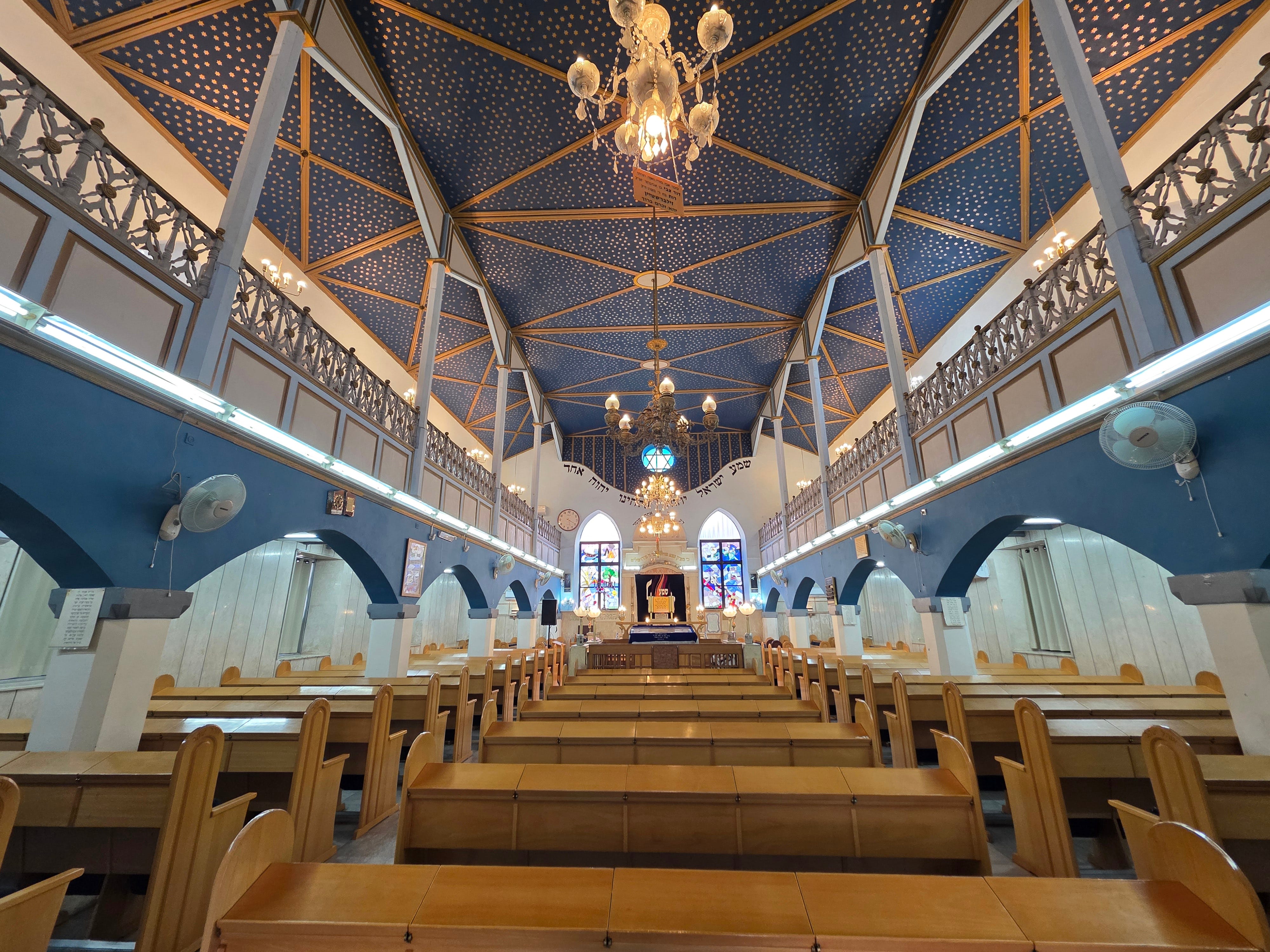
It has been a stage for a century and a half of the settlement’s and the country’s history, but what stopped me was the ceiling. Someone painted it blue and scattered it with gold stars, so that you stand in the first Zionist prayer house in the country and look straight up into a painted heaven. In a way I felt the pulse of the week inside me as I looked up, as it gathered the whole week into a single ceiling. The gold I began with in Jerusalem and the blue I have been swimming in all day, the two colours I have spent this week chasing, are up there together over the pews, laid down by people who built this room 60 years before there was a state to pray for. They painted themselves a sky and filled it with gold, as if they already knew the heavens were going to be ours.
In many ways, this was the day I have spent so much time trying to teach, the one my notes and slides keep reaching for: Israel as a living society, not a museum and not a battlefield and not simply an argument, but a real place holding the ruins of the empire that ruled it, the holiest site of a faith born elsewhere, a mountain of Druze who chose it and who were accepted back, and a coastline of blue tying the whole thing together. The same state that holds Kfar Aza holds all of this blue.
Siegels
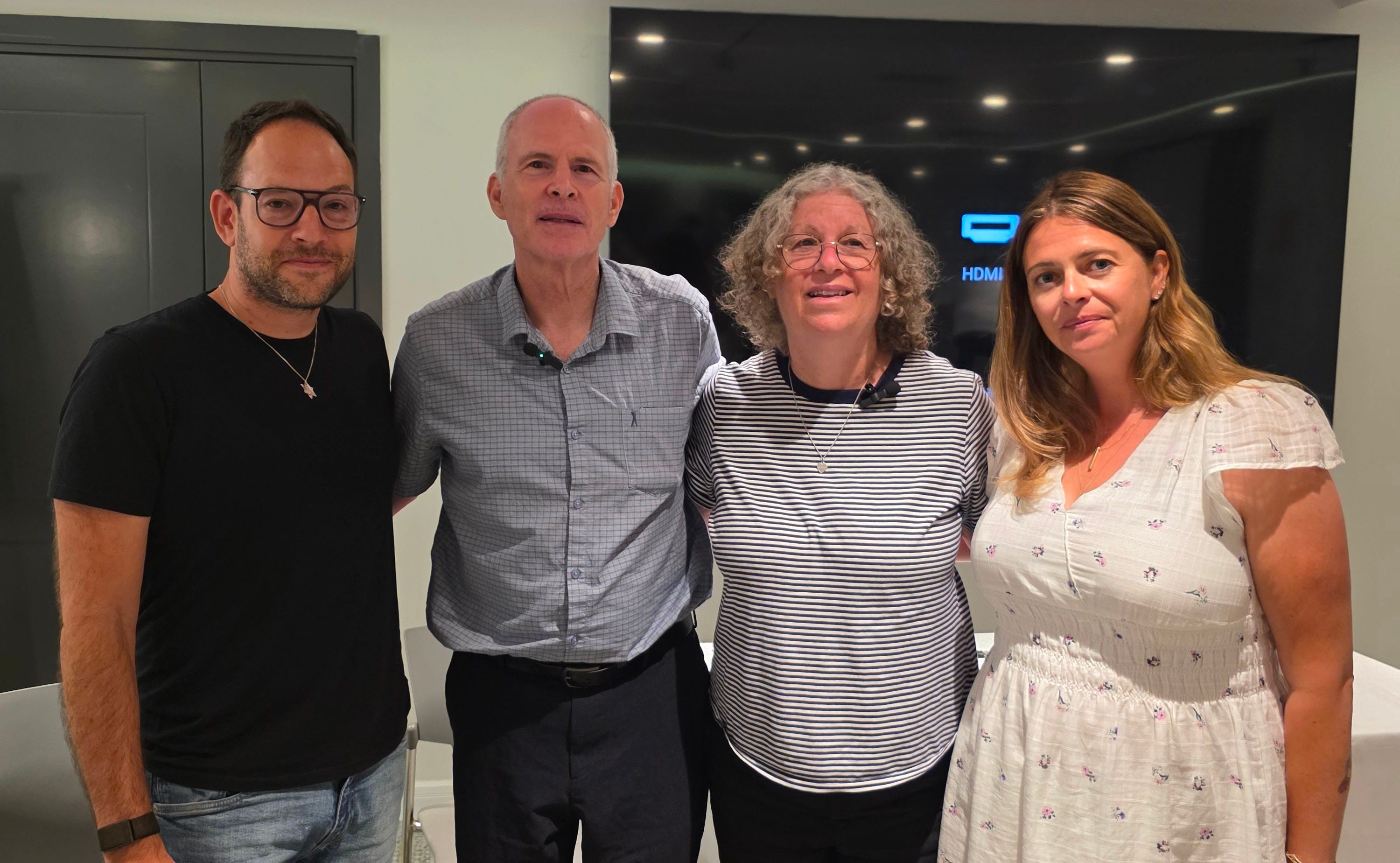
And then, back at the hotel, at the end of a day drenched in blue, we sat with Keith and Aviva Siegel. Keith was held hostage in Gaza for 484 days. Aviva was taken with him and held for 51 days before she was released, which means she came home and then waited more than a year for the rest of him to follow her out. I’ll never forget how he looked deeply at her as she spoke, how she quietly placed her hand on his leg if he ever stumbled, small gestures that say so much about a relationship that has endured the impossible. He has been free for well over a year now, and he told us, almost in passing, that he is still amazed every time he can walk to a door and open it himself. A grown man, home more than a year, still astonished by a door handle, still carrying injuries he’ll likely never fully be free of. We live our whole lives on the easy side of doors and skies and never once feel the weight of them. Because the other thing Keith said rearranged the day for me: down there, underground, for all those days, he couldn’t see the sky. No blue, not once. I had spent my last week in the blue, swimming in it, on a beach, along a coast, down a hillside, against a garden, the one free thing that had been taken from him completely. We are told to keep a thread of tekhelet in the tallit, a blue they say is the colour of heaven seen through a clear eye, and to look at it and remember the covenant and the mitzvot. Keith spent those days where there was no thread and no heaven and nothing at all to look up at, and I don’t think I’ll ever put on a tallit again without picturing a man who would have given years of his life for one blue thread.
I’m sure we all asked ourselves how a person even survives that, and Keith answered without being asked. He got through the days, he said, by building a community in his mind and speaking to them, one by one, all that time. He asked his mother how she was. He spoke to his brother, to his children, to Aviva. A community in my head, he called it. How…Jewish. Strip a Jew of everything, the sky, the door, the calendar, his dignity, the certainty of the next hour, and the thing he builds in the dark to keep himself alive is a minyan. We are the people who were never meant to do it alone, and it turns out we can’t, not even there. Especially not there.
Aviva carried her own unbearable things out of that place. She told us the terrorists threatened them by barring their emotions. They were not allowed to feel. Not allowed to cry. As if grief itself were contraband, smuggled below the surface of the earth, as if they meant to confiscate even that. She told us she lay there and wondered aloud what it was going to feel like to die. And she told us what she said to Keith on the day she was released and he was not, neither of them knowing whether they would ever see each other again: you be strong for me, and I’ll be strong for you. She walked out into the blue and left him under the city, and they carried each other’s strength across more than a year of dark, and somehow it held. She traveled across countries and continents, meeting Presidents Biden and Trump, senators and legislators and diplomats, all in an effort to bring her Keith home. Somehow, miraculously, it worked.
“The terrorists,” Aviva said, “spend their lives deciding who to hate. We get to decide who to love, and how to live. So, do everything you can.” She is doing everything she can, she told us, “for the next generation.” We all aim to be educators, but perhaps, “do everything you can for the next generation” is just Hillel’s one-legged maxim for the 21st century. Thank you Aviva and Keith.
Here’s the Catch
After Wednesday’s red, blue, and an ocean of it. Tel Aviv’s sea in the morning, Herod’s ruined Rome reclaimed by a Jewish state that outlasted the empire and the name it tried to bury us under, the Baha’i faith’s holiest place guarded inside that state, a Druze table in the Carmel flying our blue and white as its own, and Sarah Aaronsohn’s Zichron Yaakov, where the first Zionist synagogue in the land keeps a painted heaven of gold stars overhead and a young woman died buying a country she would never see. All of it under one blue sky. And then Keith and Aviva Siegel, who taught me what the blue was actually for. Keith spent 484 days in Gaza without seeing it too often. I spent today within a blue he could not reach. That’s the whole country in a single colour: the free sky overhead, and the buried memory of everyone who was kept from it.
The discipline of the week is certainly not grief. It’s refusing, ever again, to take the blue for granted, now that I’ve met a man who spent 484 days without it and a woman who walked out of the dark declaring, out loud, for whom she would always stay strong.
Beautiful. Thank you for pictures esp the synagogue with heavenly ceiling.
Thank you for putting my heart to words. It was an incredible day and week that I will carry with me forever