
Thirty Names
On our lips, in our minds

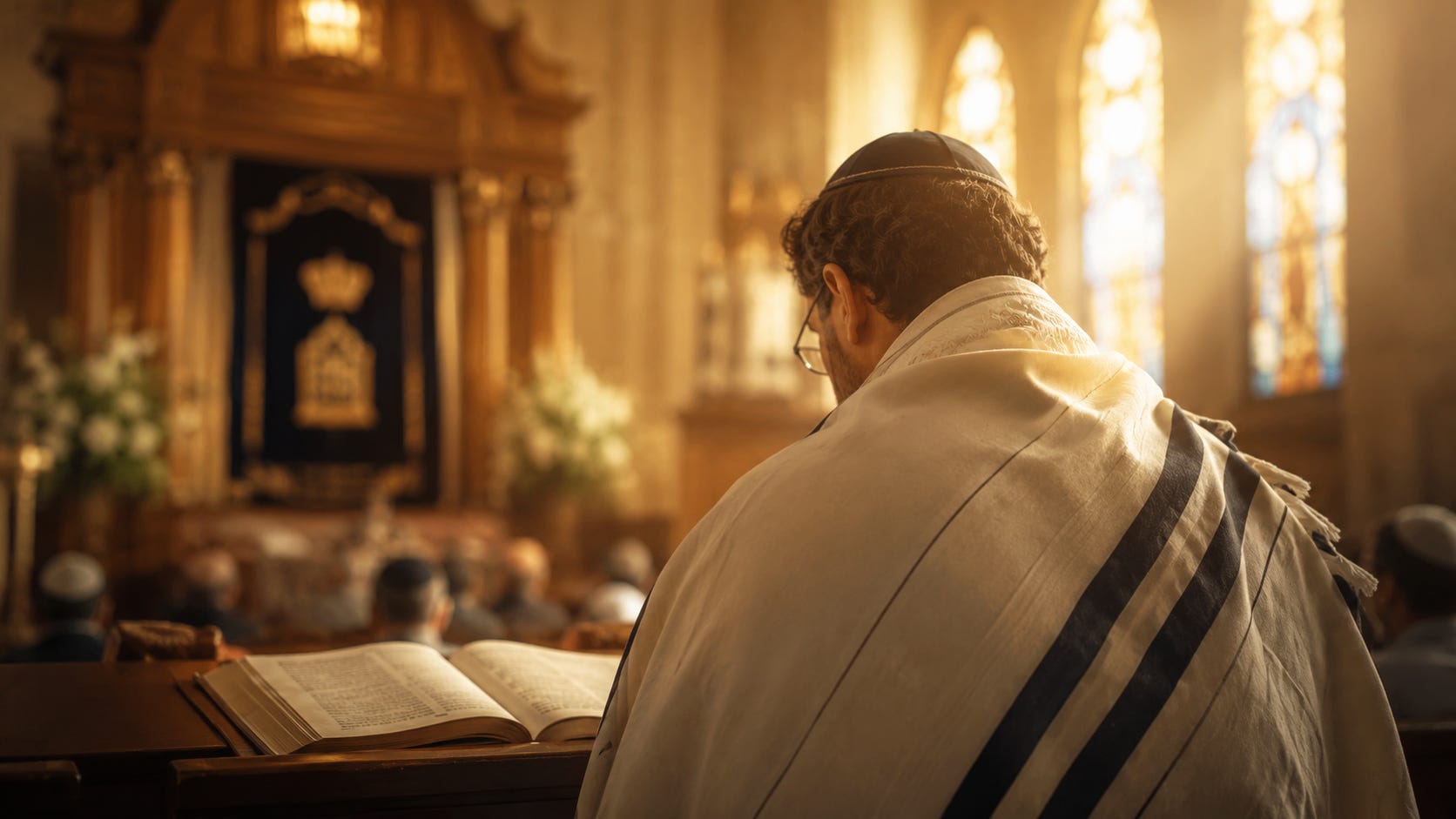
I was at synagogue on Saturday morning when something I’d seen a thousand times made me think.
After the Torah reading, the rabbi began the Misheberach prayer for the sick. People started coming up to give him names. One person, then another, then another. I lost count somewhere around twenty. There must have been thirty by the end. A line had formed in the aisle. Some whispered. Some leaned in close. Some held the rabbi’s arm. One handed the rabbi a list with about 10 names typed onto it. He nodded to each one, took the name, and added it to the list he was building out loud, in front of the room in Hebrew. The sick individual’s Hebrew name followed by their mother’s name. Yitzchak ben Sarah, Yaakov ben Rivka, Dina bat Leah.
I sat in my seat and said two names quietly to myself.
I hadn’t planned to think about anyone in particular this morning. But when the line started forming, the names were just there. I held them in my mind but didn’t go up. I’m not sure why, maybe because saying it out loud would have made something real that I was still trying to hold at a distance. Maybe because I felt the line was for people who were further along in the work of acknowledgement than I was. Maybe just because I was tired.
But what struck me wasn’t my own inaction. It was the line.
I’m not sure I’ve ever counted the names before. You hear them as a list. You let your attention drift. You wait for the service to move on. On Saturday I watched. Thirty names, give or take. Thirty people in this one room, on this one morning, carrying someone. And the thirty who went up are only the ones who chose to come forward in public - at least thirty-one, including me. Behind every one of them there was probably another name they didn’t say, a second person they’re carrying that they haven’t found the words for yet. And then there are the ones, like me, who kept it to themselves entirely.
Positioning
I have been thinking for the past few years about how the Jewish conversation has become almost entirely a conversation of positions. We argue and posture. We post. We sort ourselves into camps, and then we sort the camps into camps. The community has been pulled in so many directions that it sometimes sadly feels like there isn’t a community anymore, only a contested space where people who used to share something now mostly share a target.
The Misheberach was none of that. The Misheberach was a line of people, walking up, one by one, with a name.
There were no positions in that line. No one came up to declare anything. No one was performing. They were just bringing someone they loved into the room. They were effectively saying: this person is sick, and I can’t heal them, and I can’t be with them right now, and I can’t do anything except say their name in a place where naming is supposed to matter. The line was an admission of helplessness. It was also, I think, the most honest thing I have seen Jews do together in a long time.
I sat there and held some names in my mouth and didn’t say them aloud. And when the rabbi finished and the room said amen, I felt as though I’d said it after all. Whatever the Misheberach does, it had done it.
I don’t know if prayer works. I don’t know what it means for thirty names to be lifted into a room full of people who may not even know each other’s names. I don’t know what happens to the words after we say them. But I know what I saw: thirty people who chose, in a week when there is so much else to argue about, to bring a name into a room and ask for something on its behalf. And one more person in the back, holding a name in his teeth, who didn’t quite have it in him to come forward.
That, too, is a kind of prayer. Maybe the most common kind.
Here’s the Catch
The Misheberach is one of the few moments left in Jewish communal life that isn’t about position. It’s a line of people, each carrying a name, each admitting they can’t do anything about what they’re carrying except say it out loud. I left synagogue on Saturday wondering whether the most honest Jewish thing we do these days is the part of the service we tend not to think about.
Mi Sheberach (He who blesses):
May the One who blessed our ancestors - Abraham, Isaac, and Jacob, Sarah, Rebecca, Rachel, and Leah - bless and heal the one who is ill: ____son/daughter of ___. May the Holy Blessed One overflow with compassion upon him/her, to restore him/her, to heal him/her, to strengthen him/her, to enliven him/her. The One will send him/her, speedily, a complete healing - healing of the soul and healing of the body - along with all the ill, among the people of Israel and all humankind, soon, speedily, without delay, and let us all say: Amen!
Thanks Adam for sharing your thoughts on how we can carry our concern and love for others. Im not Jewish however my family have such a deep respect for your God, your people and your ways. Culture is how you think, how you act and how your interact. I love the Hebrew culture :-)
At my synagogue the names are shared as the Rabbi looks in your direction. A sea of names wash over you as his glance passes around the sanctuary. It is a very warming moment where everyone is part of something bigger than themselves. I always feel something special.
Thanks for sharing!