
Keeping Memory Alive
Rethinking future Holocaust remembrance

January 27, 2026 marks Holocaust Remembrance Day and the 81st anniversary of the liberation of Auschwitz.
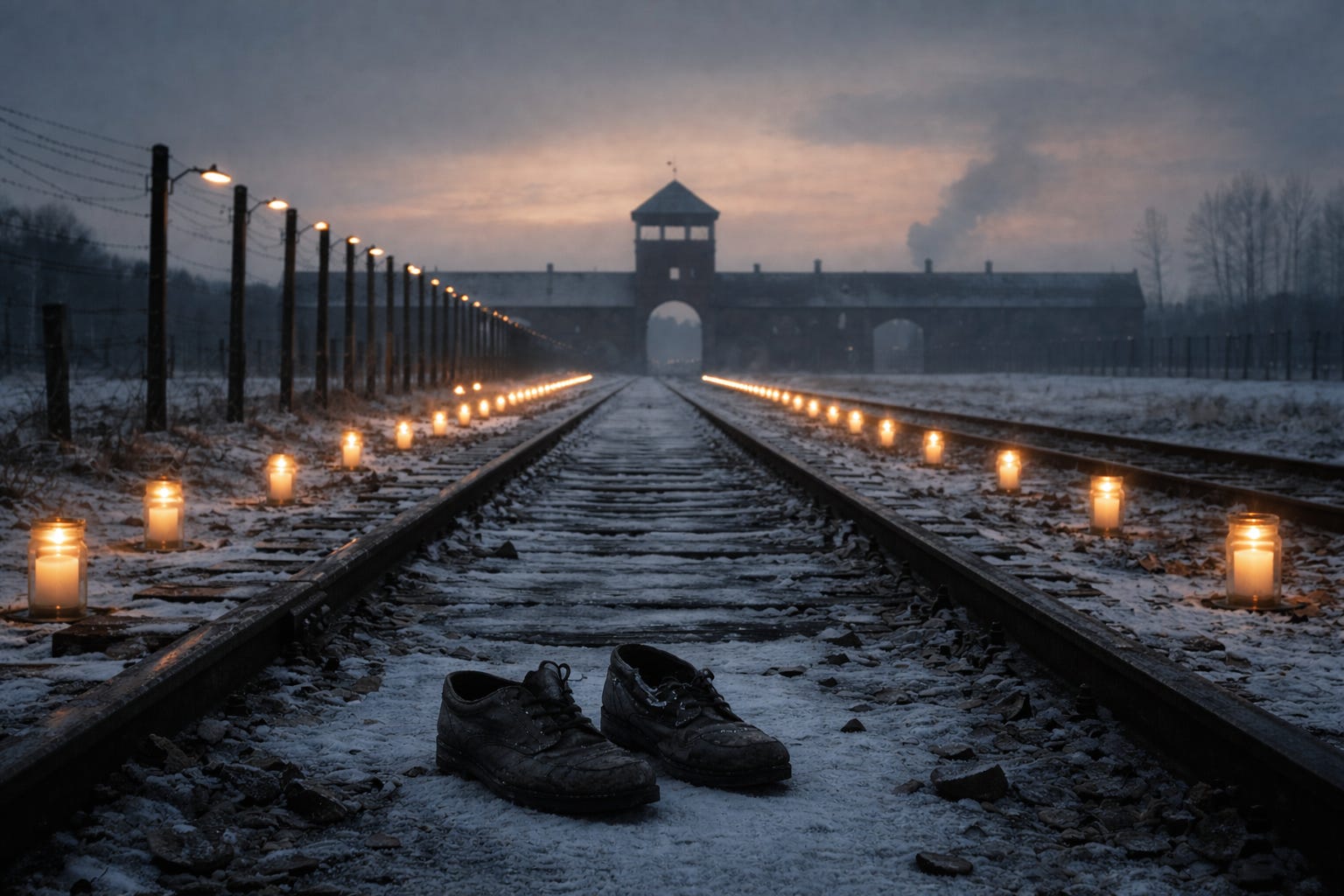
Every year I go through the motions. I attend the ceremony, I light the candles, I hear the same speeches about “Never Again.” And every year, I worry that I’m increasingly starting to do exactly what I do in synagogue: reciting prayers without thinking about what they mean. The words are there, the ritual is maintained, but something essential is missing.
This concerns me deeply. In nineteen years, on January 27, 2045, we will mark the 100th anniversary of the liberation of Auschwitz. By then, there will certainly be no survivors left to tell their stories firsthand. The last living voices will have been silenced by time. And I wonder: what will Holocaust remembrance look like when we’ve lost that tangible connection to the past?
The Problem of Ritualization
I think we’re already there, honestly. Holocaust commemoration in many respects has become ritualized in the same way religious practice often does - we go through familiar motions, we recite familiar words, and we leave feeling like we’ve fulfilled an obligation. But have we actually engaged with anything? Have we changed? Have we been challenged?
When commemoration becomes predictable, it stops penetrating our consciousness. We know what to expect: testimony from a survivor (while we still have them), the recitation of six million dead, the solemn (and utterly ridiculous at this point) promise of “Never Again,” perhaps some candles. If you miss one year, you may shrug and think, “Well, I know what happened. I was there last year.” The events become interchangeable.
This is dangerous. Not because the Holocaust will be forgotten - the basic facts are well-documented and taught in schools, for now. But because remembrance without engagement is a form of forgetting. We can know all the facts and still fail to internalize the lessons. We can recite the numbers and still not grapple with the question that should haunt us: how did ordinary people allow this to happen?
What We’re Missing
The hardest part of Holocaust education isn’t teaching what happened, but rather teaching how it happened. We focus, understandably, on the victims and their suffering. But we shy away from the more uncomfortable work of understanding the perpetrators and bystanders. Auschwitz didn’t fall from the sky - it was a slow march of dehumanization, then separation, and then murder. We let ourselves off the hook by imagining that Nazis were monsters, fundamentally different from us.
They weren’t. They were teachers, doctors, bureaucrats, and neighbours. That’s the terrifying lesson we keep avoiding. A commemoration that allows us to think “we’d never be like them” has failed. One that forces us to ask “what beliefs do I hold, what pressures would I yield to, what would I risk for strangers?” - that’s doing the real work.
I want my children and grandchildren to walk away from Holocaust remembrance asking questions, not feeling satisfied. Questions like:
How did regular people decide to do those things?
What would we have done if we lived there?
Why didn’t more people help?
Are we doing something like that now without realizing it?
Is it still being done to us?
These questions should be uncomfortable. They should follow us home and spark conversations around the dinner table. They should resist easy answers.
The Test of October 7th
I obviously think about October 7, 2023 - the worst day for Jewish people since the Holocaust. How we choose to commemorate October 7th in twenty years will, I think, preview how Holocaust remembrance evolves. Will it become another set of rote recitations, or will we find ways to keep the memory genuinely alive and morally demanding?
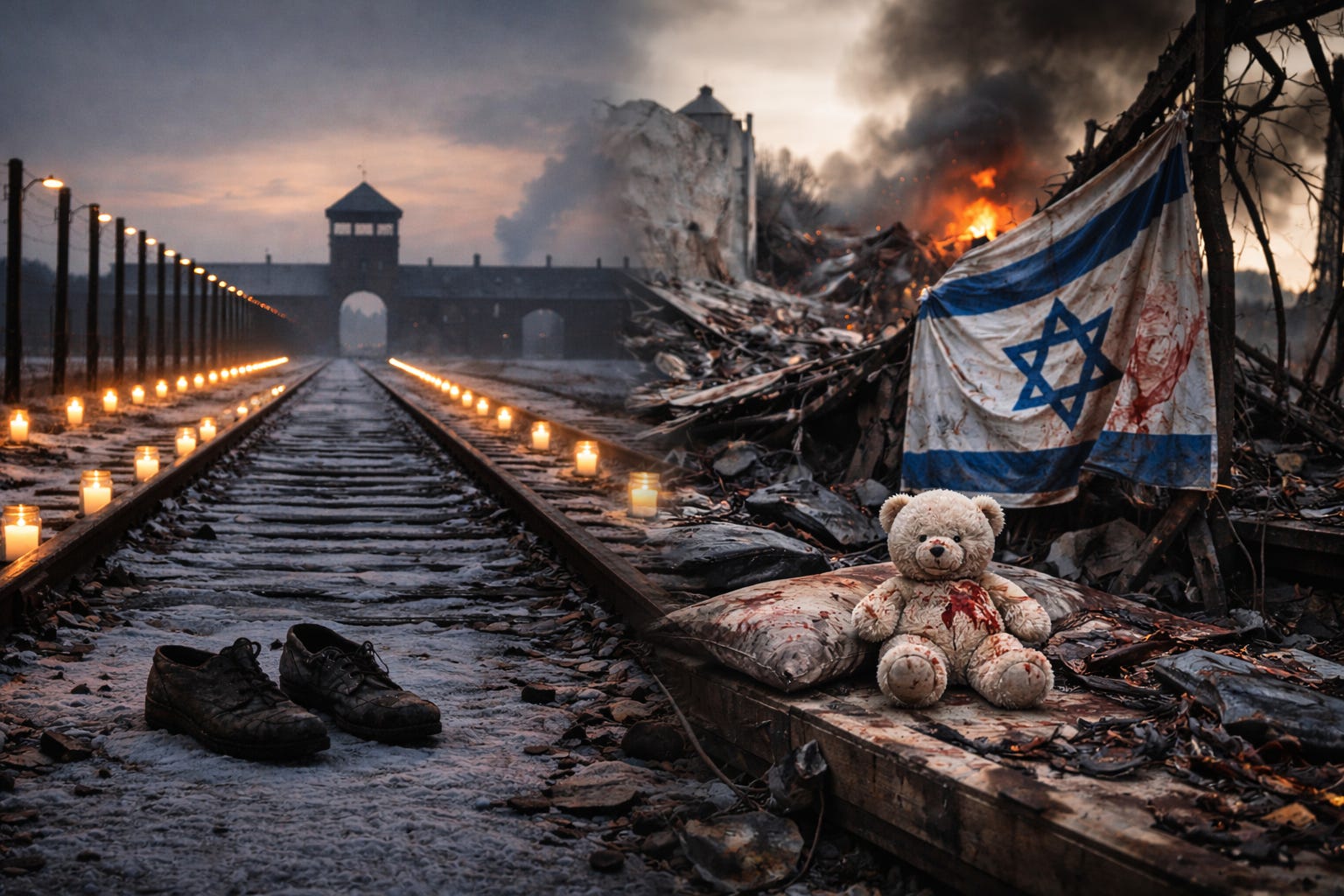
The decisions we make now matter. We have an opportunity and obligation to start adapting our approach to Holocaust remembrance before we reach that 100th anniversary.
Moving from Remembrance to Responsibility
Here’s what I think needs to change: we need to shift from passive remembrance to active responsibility. The question can’t just be “what happened then?” It needs to be “what does this demand of us now?”
Some ideas that could make commemoration unmissable rather than optional:
Make each year unique and action-oriented: Instead of repeating the same ceremony, what if each year the community collectively committed to one specific action - sponsoring refugees, combating or supporting specific legislation, supporting a targeted group - and reported back the next year on what was accomplished?
Create real accountability: What if individuals publicly committed to personal actions and were asked about them the following year? Not grand gestures necessarily, but concrete commitments: “I’ll speak up once this year when I normally wouldn’t” or “I’ll learn about one current situation where people need help.”
Empower younger generations: Let those who haven’t inherited the muscle memory of ritual design new forms of commemoration. They might bring fresh approaches that break through our calcified practices.
Embrace intergenerational conversation: Not grandparents teaching “the story,” but sharing “what I still don’t understand” and wrestling with hard questions together. Use real historical dilemmas: you’re hiding a Jewish family and your own children could be killed if discovered - what do you do? Then discuss it at dinner.
Use technology: We must embrace the possibilities that come with AI, and virtual reality, along with other resources, to help us teach what happened, and better understand how it happened. These options could be better incorporated into memorials and ceremonies to really drive home the impact.
The Honest Answer
When I ask myself what I’m willing to commit to this year, or what action I’ll take because the Holocaust places an obligation on me, my honest answer is: I’m not sure.
That uncertainty is uncomfortable. But maybe that discomfort is exactly what we need to carry forward. Maybe the commemoration that plants that question and lets it remain unanswered is more valuable than one that lets us feel we’ve fulfilled our obligation by showing up.
Most of us, if we’re honest, wouldn’t have been heroes. We’d like to think we would have hidden Anne Frank, but we probably would have looked the other way. Most people did. That’s the truth we need to sit with. Not to excuse ourselves, but to understand our own capacity for moral failure - and to do the hard work of preparing ourselves to be better.
As we approach that 100th anniversary, as we lose our last survivors, we have a choice. We can let Holocaust remembrance become increasingly ritualized and rote, or we can transform it into something that genuinely demands something of us. Something that sends people home unsettled, with questions that need working through, with obligations that can’t be satisfied by attendance alone.
The memory of six million murdered Jews deserves more than our muscle memory. It deserves our moral reckoning, our honest self-examination, and our active commitment to do better. That’s the work ahead of us.
May the memories of every victim of the Holocaust, and every survivor we have lost in the years since, be a blessing.
Here’s the Catch:
Remembrance isn’t about perfecting our memory of the past - it’s about refusing to perfect our comfort with it. The moment Holocaust commemoration feels complete, sufficient, or like something we’ve mastered, we’ve lost what matters most. Our obligation isn’t to have all the answers about what we’d do or what we’ll commit to. Our obligation is to carry the question forward, unsettled and unresolved, into every choice we make.
Dedication:
I want to dedicate this to the memory of Irving Eisner, who passed away on Saturday January 24, 2026, just two-months shy of his 100th birthday. I learned of his passing just after I finished writing the above essay.
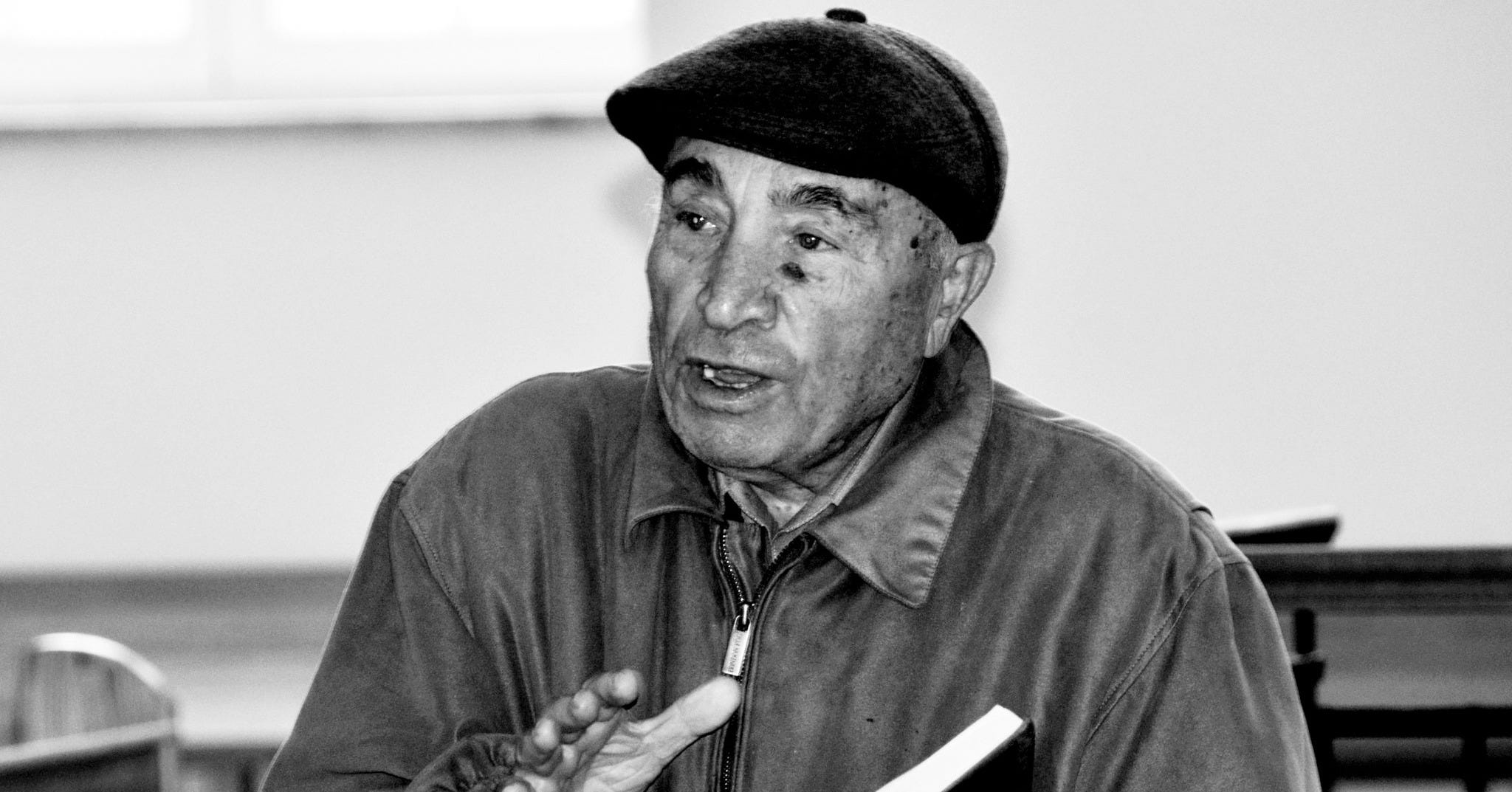
Mr. Eisner was my principal at Associated Hebrew School, and the first Holocaust survivor I ever met. His was the first testimony I ever heard. He made the Holocaust real for me in a way no history lesson could - it wasn't just something that happened to six million Jews in the abstract, but something that happened to someone who knew my name, who walked the hallways of my elementary school. It was only through him that I knew what it was. I remember reading his two books about surviving Dachau with a kind of horror that still sits with me. He signed them both for me. They're on my bookshelf now, a reminder that history isn't distant - it's as close as the people we know.
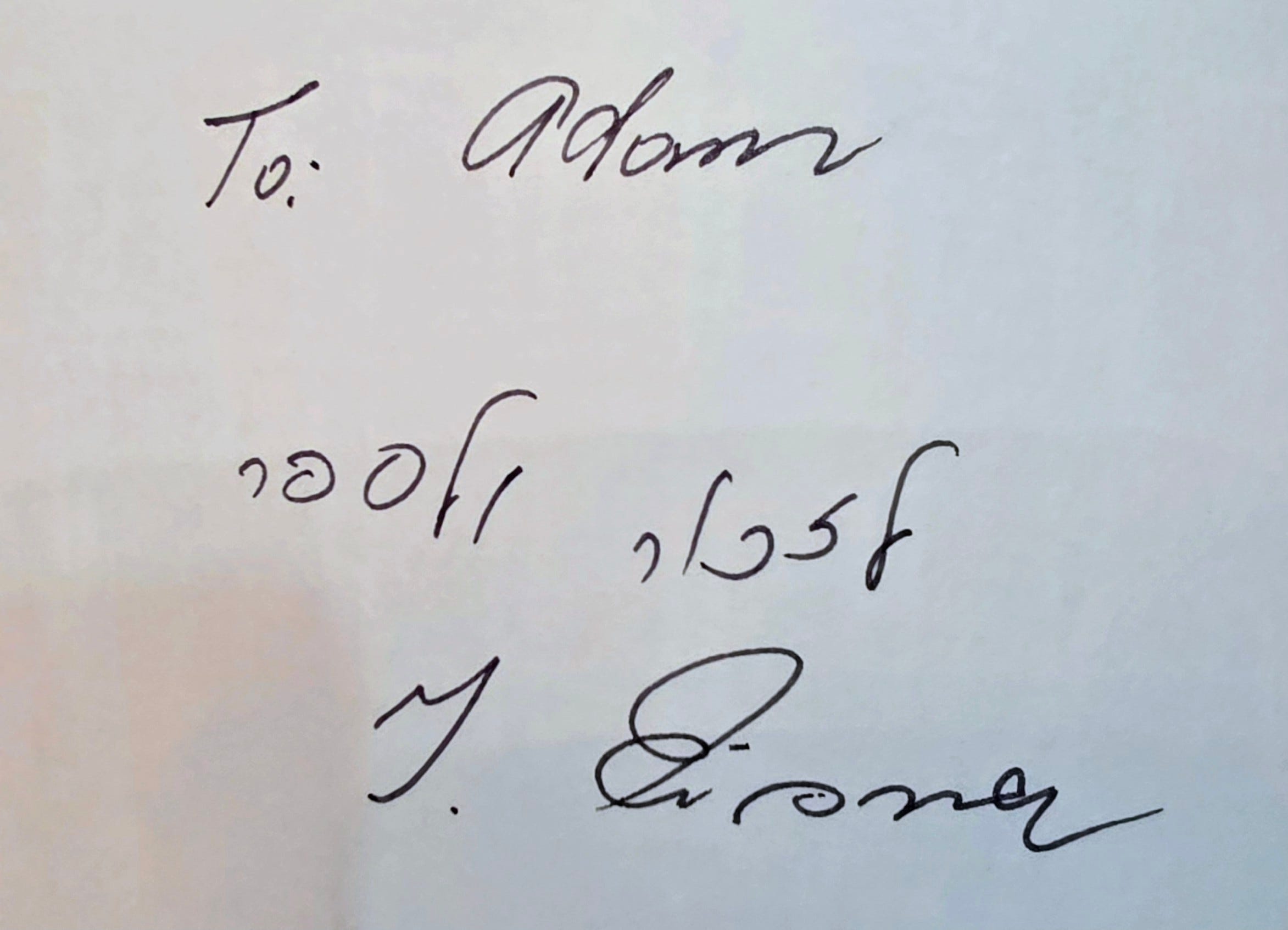
Mr. Eisner (he was my principal, I could never call him Irving) was born in Sojmo, Czechoslovakia, on March 10, 1926. He had four sisters and one brother. He and his family were sent to Auschwitz-Birkenau in 1944. His mother, brother and two sisters were killed there. He was then sent to Dachau, where he became prisoner #89012. Mr. Eisner was liberated from Dachau by US troops in April 1945.
He and his sister, Sarah, survived, along with their father. In 1946, the three found their way to a German Displaced Persons camp. While there, Mr. Eisner met and married his wife Sima. In 1949, they went to Israel, and settled there until 1954, at which time they came to Canada. Irving was a very well-known teacher at both Eitz Chaim and Associated Hebrew Schools.
Irving was blessed with three sons, nine grandchildren, and 21 great-grandchildren. He passed away and is buried in Israel. May his memory be a blessing.
Such an important message, thank you. For me, it’s important to stand up, speak out, attend, whenever possible, supporting Jews, and Israel, and expressing how I feel
. I get backlash, or worse, non interest, but even though I’m uncomfortable, I continue.
Adding Responsibility to Remembrance is a super idea! I had already, sadly, dropped the ‘N’ from Never Again. Encouraging us to set goals to enact our individual and collective responsibility to control evil human inclinations at least gives us some agency, and homework.